
A tooth can look fine in the mirror and still feel different when you bite down. Maybe a cold drink causes a sharp twinge, an old filling has chipped, or your dentist has found decay beneath a restoration. In a crown versus filling decision, the central question is not which treatment sounds more substantial. It is which option can restore your tooth safely while preserving as much healthy structure as possible.
A filling and a crown are both dependable restorative treatments, but they solve different problems. The right recommendation depends on the amount of remaining tooth structure, where the damage is located, how much force the tooth handles, and whether there are cracks or infection concerns beneath the surface.
Crown Versus Filling: The Fundamental Difference
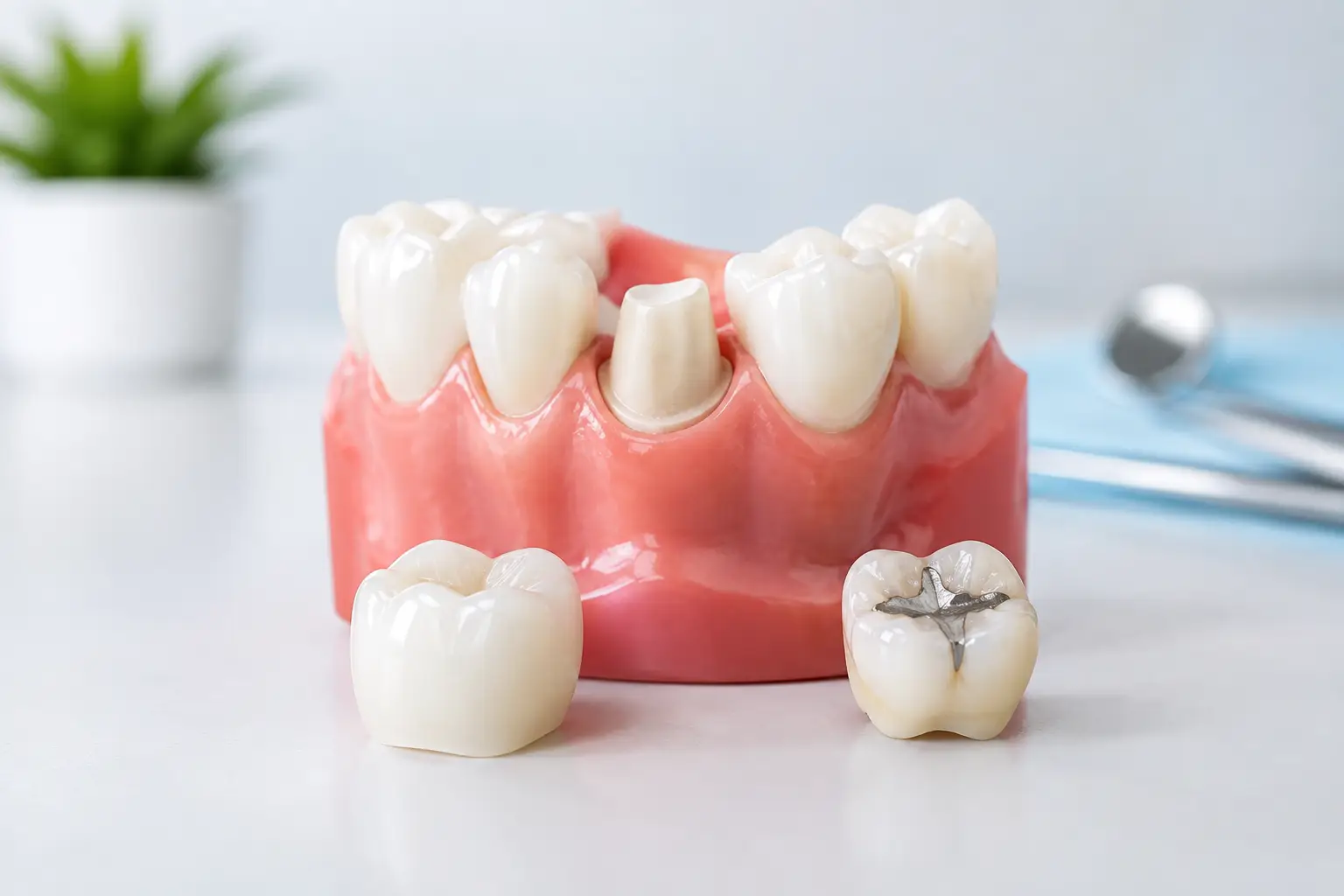
A filling repairs a smaller damaged area. After removing decay or failing filling material, your dentist bonds tooth-colored composite resin directly into the prepared space. The material is shaped to support your bite and blend naturally with the surrounding enamel. Fillings are conservative because they retain most of the natural tooth.
A crown covers the entire visible portion of a tooth above the gumline. It is a custom restoration, often made from strong, natural-looking ceramic, that fits over a tooth after it has been carefully prepared. Rather than simply replacing a missing section, a crown surrounds and reinforces a weakened tooth.
Neither treatment is automatically better. A filling is often the more conservative choice when a tooth is strong enough to support it. A crown can be the more protective choice when a large filling would leave thin walls of tooth structure vulnerable to breaking.
When a Filling May Be the Right Choice
A filling is commonly recommended when decay, a small fracture, or a worn area is limited in size and the tooth remains structurally sound. It may also be appropriate to replace an older filling that has leaked, stained, or chipped without causing significant damage to the surrounding tooth.
Modern composite fillings are a popular choice for visible teeth because they can be matched closely to your natural tooth color. They bond to the tooth and typically allow the dentist to remove less healthy enamel than a crown would require.
A filling may be a good fit when the damage is modest, the tooth has no major cracks, and enough strong tooth structure remains around the repair. For a small cavity, choosing a crown simply because it is more extensive is not necessarily better dentistry. Preserving healthy tooth structure matters.
That said, a filling has limits. If it becomes too large relative to the tooth, the remaining enamel can flex under chewing pressure. Over time, this may lead to fractures along the edge of the filling or through the tooth itself.
When a Crown Offers Better Protection
A crown is often recommended when a tooth has lost a significant amount of structure from extensive decay, a large existing filling, a fracture, or repeated dental work. Back teeth are especially likely to need crowns because they absorb substantial pressure every time you chew.
Crowns are also frequently used after root canal treatment. A tooth that has needed root canal care may be more brittle or may have required the removal of substantial internal structure. Covering it with a crown can help reduce the chance that it will split during normal use.
Your dentist may recommend a crown if you have a cracked tooth, even when the crack is difficult to see. Cracks can worsen with the repeated pressure of chewing. A properly designed crown holds the tooth together and helps distribute bite forces more evenly.
Other situations where crowns may be appropriate include teeth with severely worn biting surfaces, teeth that support a bridge, or teeth that need a major change in shape, color, or alignment as part of a broader smile transformation plan.
How Your Dentist Decides Between a Crown and Filling
The visible cavity or broken edge is only part of the picture. A thoughtful examination considers what is happening beneath and around the tooth. Digital X-rays can reveal decay between teeth, changes near the root, and the condition of an older restoration. Your dentist will also assess your bite, gum health, symptoms, and the amount of solid tooth remaining.
The location of damage matters. A small repair on the front of a tooth may be well suited for composite bonding. The same-sized defect on a molar can be more concerning if it sits on a chewing surface or extends between the cusps, which are the raised points that absorb bite pressure.
Your habits matter, too. If you grind or clench your teeth, chew ice, or regularly bite hard foods, even a moderate restoration may need additional protection. A nightguard can be part of the recommendation for either a crown or filling, especially if grinding contributed to the damage.
Appearance, Comfort, and the Treatment Process
For many patients, the idea of a crown feels more intimidating than getting a filling. A filling is often completed in one visit, depending on the size and location of the repair. The tooth is numbed, decay is removed, and the composite material is placed and polished.
A traditional crown usually requires at least two appointments. At the first visit, the tooth is prepared and scanned or impressed so a custom crown can be made. A temporary crown protects the tooth while the final restoration is created. At the second visit, the dentist checks the fit, color, and bite before permanently cementing the crown.
The process should never feel rushed. Local anesthesia helps keep treatment comfortable, and your dental team should explain what to expect before beginning. If anxiety has kept you from getting care, let your dentist know early. At Art of Smiles, patients can discuss comfort-focused options, including sedation dentistry when appropriate, so treatment can feel manageable rather than overwhelming.
Cost and Long-Term Value
A filling generally costs less upfront because it uses less material and usually requires less clinical time. A crown is a more involved restoration, so the initial investment is higher. Insurance coverage can vary based on your plan, the reason for treatment, and the materials used.
It is still helpful to look beyond the immediate cost. If a tooth truly needs a crown but receives a very large filling instead, a future fracture could lead to more complex treatment, such as root canal therapy, crown replacement, or even tooth loss. On the other hand, crowning a tooth that could be restored conservatively with a filling may remove more natural structure than necessary.
With conscientious home care and regular dental visits, both treatments can last for years. Fillings can eventually wear, stain, or develop leakage at their edges. Crowns can also wear or loosen over time, and the tooth beneath a crown can still develop decay near the gumline. Brushing twice daily with fluoride toothpaste, cleaning between teeth, and keeping regular exams are essential for protecting either restoration.
Questions Worth Asking at Your Visit
If you are deciding between treatment options, ask your dentist to show you what they see. You may want to know how much healthy tooth structure remains, whether there is evidence of cracking, what could happen if you choose the more conservative option, and how each restoration is expected to perform in your bite.
It is also reasonable to ask about the material being recommended, the number of visits, expected sensitivity, and ways to make treatment more comfortable. Clear answers can replace uncertainty with a plan that feels right for your health, your goals, and your budget.
A crown versus filling decision is ultimately about protecting your natural tooth for as long as possible. If you have a damaged tooth, new sensitivity, or an old restoration that no longer feels right, a careful evaluation can give you clarity and help you move forward with confidence.
