A sudden toothache can make the choice feel urgent: root canal vs extraction. You may want the pain to stop as quickly as possible, especially if dental treatment has felt stressful in the past. Yet the best solution is not always the fastest-looking one. It depends on what is happening beneath the surface of the tooth, how predictable treatment will be, and what will best protect your smile for years to come.
At Art of Smiles, we believe you deserve clear answers, thoughtful recommendations, and a treatment experience designed around your comfort. Whether a tooth can be saved or needs to be replaced, the goal is the same: relieve pain, restore healthy function, and help you feel confident moving forward.
Root Canal vs Extraction: The Central Difference
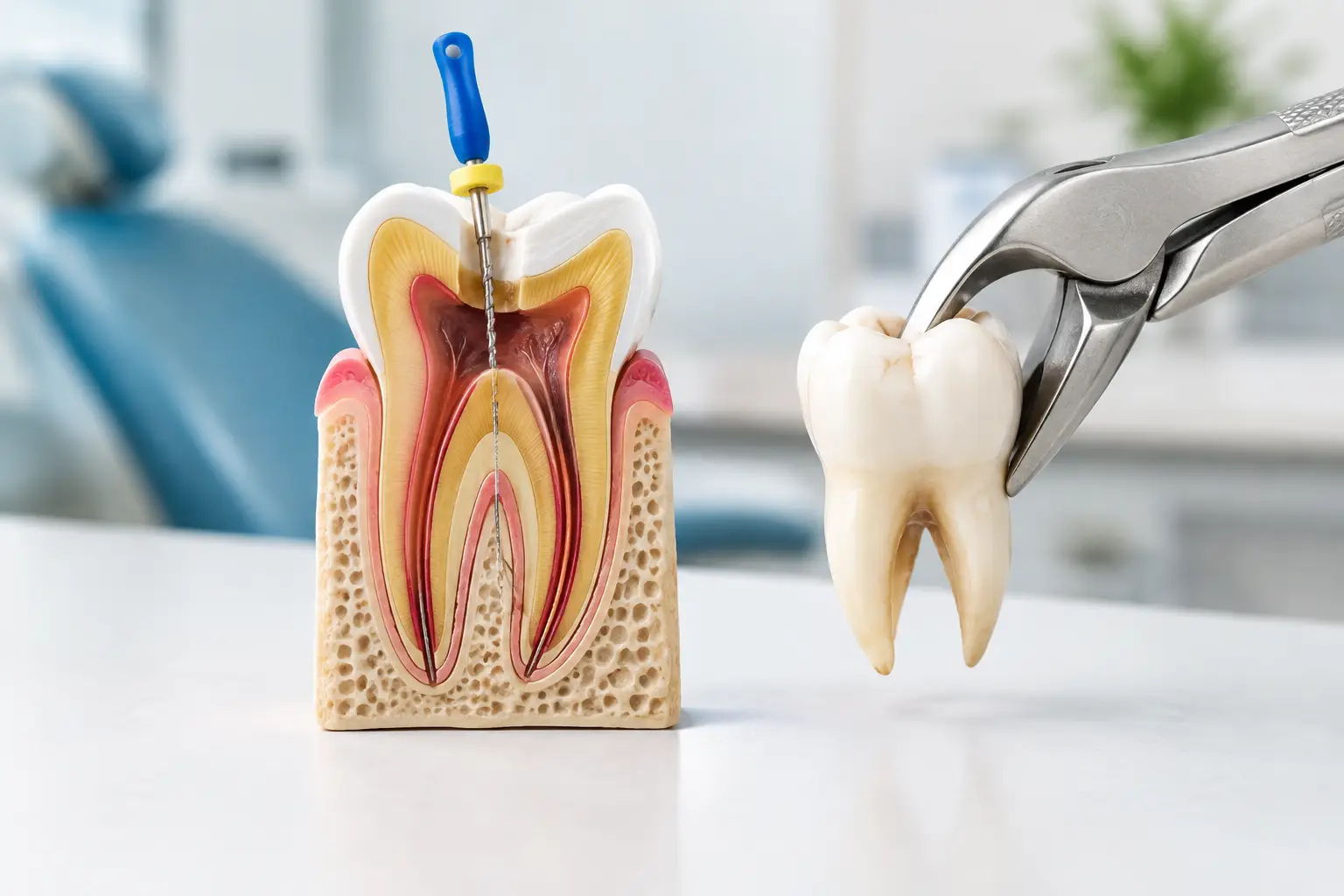
A root canal is a treatment that saves a natural tooth when the soft tissue inside it, called the pulp, becomes inflamed or infected. During treatment, the dentist carefully removes the damaged tissue, cleans and disinfects the inside of the tooth, then seals it to prevent future infection. Most back teeth also need a crown afterward to protect the remaining tooth structure.
An extraction removes the tooth completely. It may be recommended when decay, infection, fracture, or bone loss has caused damage that cannot be repaired predictably. Removing the tooth can eliminate the immediate source of infection or pain, but it also creates a space that often needs a long-term replacement plan.
Neither option is automatically better. A root canal is generally preferred when the tooth has enough healthy structure and support to be restored successfully. Extraction may be the healthier, more reliable choice when saving the tooth would involve repeated treatment with an uncertain outcome.
When Saving the Tooth Makes Sense
Your natural tooth has real value. It helps you bite and chew normally, supports the shape of your bite, and keeps neighboring teeth in their proper positions. When a tooth can be saved with a root canal and a durable restoration, that is often the most conservative path.
A root canal may be a strong option when infection is limited to the pulp or root canals, the tooth has stable gum and bone support, and there is enough sound tooth material for a crown or filling to hold securely. It can also make sense when the tooth plays an important role in your bite, such as a canine tooth or a molar that helps you chew.
Modern root canal treatment is designed to relieve the pain caused by infection, not create it. Local anesthetic keeps the area numb, and many patients compare the experience to receiving a filling. If anxiety has kept you from seeking care, sedation options can make treatment feel far more manageable. You should never feel that fear means you have to postpone necessary care.
A root canal does require follow-through. The tooth is no longer nourished by its pulp, and it may become more vulnerable to fracture over time, particularly if it is a heavily used back tooth. A custom crown is often recommended after treatment to protect it. With appropriate restoration and regular dental care, a treated tooth can serve you well for many years.
Signs a Tooth May Need Root Canal Treatment
Severe or lingering sensitivity to hot or cold, pain when biting, a deep cavity, swelling near the tooth, or a pimple-like bump on the gums can all point to pulp damage or infection. However, symptoms alone cannot determine the right treatment. Some infected teeth cause very little pain, while other dental problems can feel similar.
A thorough exam and digital imaging help reveal the extent of damage, the condition of the roots, and the health of the surrounding bone. That information matters more than guessing based on discomfort alone.
When Extraction Is the Better Choice
There are times when preserving a tooth is no longer the kindest or most predictable option. For example, a tooth may be fractured far below the gumline, have extensive decay that extends into the root, or have advanced bone loss from gum disease. In these cases, even a technically successful root canal may not create a tooth that can function reliably long term.
Extraction may also be advised if a tooth has already had root canal treatment and continues to have significant infection or structural problems that cannot be reasonably corrected. The same can be true for certain wisdom teeth, teeth crowded beyond restoration, or teeth damaged by trauma.
Choosing extraction does not mean choosing to live with a gap. If the removed tooth is visible when you smile or important for chewing, replacing it is usually worth discussing before or soon after the extraction. An untreated gap can allow nearby teeth to drift, affect your bite, and contribute to loss of jawbone in that area.
For many patients, a dental implant offers the closest replacement for a natural tooth because it replaces the missing root as well as the visible crown. Depending on your needs, a bridge or removable option may also be appropriate. The ideal choice depends on your oral health, goals, timeline, and budget.
Comparing Comfort, Time, and Cost
It is understandable to look at the immediate cost first. An extraction often costs less than a root canal and crown at the start. But if you need to replace the missing tooth with an implant, bridge, or denture, the complete cost can be higher than saving the tooth. Looking only at the first appointment can leave out an important part of the decision.
Treatment time also varies. A root canal may be completed in one or more visits, followed by placement of a permanent restoration. Extraction can be performed in one visit, but healing takes time. If an implant is planned, it may require a healing period before the final crown is placed, although some cases allow for a more immediate approach.
Comfort should be considered in the full context of care. Both procedures are performed with local anesthesia, and post-treatment soreness is usually temporary and manageable with the instructions your dental team provides. For patients with dental fear, a calm environment and appropriate sedation can make a meaningful difference. Art of Smiles is the only IV sedation dental office in the area, offering an added level of support for patients who need help feeling relaxed during more involved care.
Questions That Lead to a Better Decision
Before deciding, ask your dentist whether the tooth can be restored predictably, not simply whether it can be treated. A tooth may be technically possible to save but still have a guarded long-term outlook. You should also understand whether you will need a crown after a root canal, what replacement options would follow an extraction, and how each plan affects neighboring teeth.
Your overall dental health matters, too. Someone with healthy gums and strong bone may be an excellent implant candidate after extraction. Someone who has a restorable tooth and wants to avoid replacing it may benefit most from root canal treatment. For patients with multiple failing teeth, a broader restorative plan may offer a better path than addressing each tooth in isolation.
There is no single answer that fits every smile. The right recommendation should reflect diagnostic findings, your medical history, your comfort level, and what you want your smile to look and feel like in the years ahead.
Pain can make any dental decision feel overwhelming, but you do not have to make it alone or rush into a solution without understanding it. A compassionate exam can turn uncertainty into a clear plan, so you can move toward relief with confidence and protect the smile that supports your everyday life.
