A missing tooth can change more than a photograph. It may make chewing uncomfortable, affect the way you speak, or leave you hesitant to smile freely. The best options for missing teeth replacement depend on where the tooth is located, how many teeth are missing, the health of your gums and jawbone, and what feels manageable for you physically and emotionally.
There is no single solution that is right for everyone. A thoughtful treatment plan should protect your remaining teeth, restore daily comfort, and support a smile that feels like your own. For patients who feel anxious about dental treatment, comfort and sedation options should be part of that conversation from the beginning.
Why Replacing Missing Teeth Matters
When a tooth is lost, the effects can gradually extend beyond the empty space. Nearby teeth may shift toward the gap, changing your bite and creating areas that are harder to clean. A missing tooth can also place more pressure on the teeth that remain.
Over time, the jawbone in the area of a missing tooth can lose stimulation and begin to shrink. This is especially relevant when several teeth are missing. Replacing teeth promptly is not always possible, but an evaluation can help you understand what is happening now and which options may preserve the most oral health moving forward.
Best Options for Missing Teeth Replacement: A Closer Look
Dental implants for a single missing tooth
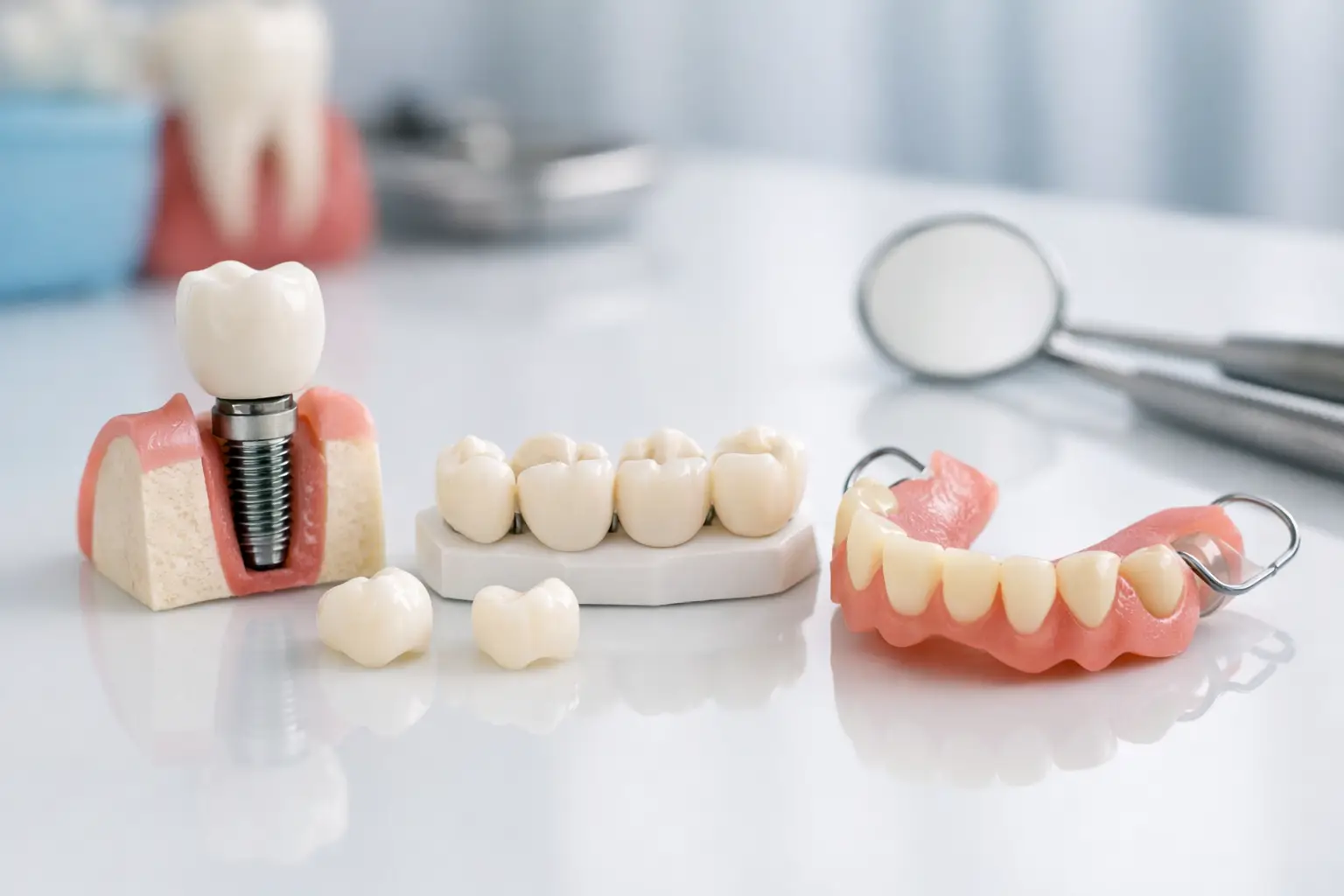
A dental implant is designed to replace a tooth from the root up. A small titanium implant is placed in the jawbone, where it can integrate with the bone. Once the area has healed, a custom crown is attached to restore the visible portion of the tooth.
For many patients, an implant is the closest option to a natural tooth in appearance, function, and feel. It does not require reshaping the healthy teeth beside the gap, and it helps provide the jawbone with the stimulation it needs. With consistent home care and routine dental visits, implants can be a long-term solution.
Implant treatment does require adequate bone support and a healing period. If bone loss has already occurred, a bone graft may be recommended before implant placement. While this can add time to treatment, it may create a stronger foundation and improve the long-term result.
Implant-supported bridges for several missing teeth
When multiple teeth are missing next to one another, an implant-supported bridge may restore the area without placing an implant for every individual tooth. The bridge is supported by strategically placed implants rather than by neighboring natural teeth.
This approach can offer excellent stability and a natural-looking result. It may also be more comfortable than a removable appliance for patients who want a secure replacement that stays in place while eating and speaking. The exact number of implants needed depends on the size and location of the space, your bite, and the quality of the supporting bone.
Traditional dental bridges
A traditional bridge fills a gap by joining a replacement tooth to crowns placed on the teeth beside it. It is a well-established treatment that can often be completed more quickly than an implant and may be a practical choice when the adjacent teeth already need crowns.
The trade-off is that supporting teeth must be prepared for crowns, even if they are otherwise healthy. A bridge also does not replace the missing tooth root, so it does not prevent bone loss beneath the gap. Still, for the right patient, a carefully designed bridge can restore appearance and function beautifully.
Partial dentures
A removable partial denture replaces one or several missing teeth and is designed to fit around the natural teeth that remain. Modern partials can be lighter, more natural-looking, and more comfortable than many patients expect.
Partials can be an appropriate option when several teeth are missing in different parts of the mouth, when implant treatment is not the preferred choice, or when a patient needs an efficient solution while planning more permanent care. They do require daily removal and cleaning, and some patients need time to adjust to the feeling of wearing one.
A partial denture should fit securely and be checked regularly. If it becomes loose, rubs the gums, or changes the way your bite comes together, do not try to adjust it at home. A professional adjustment can protect your comfort and the health of the teeth supporting it.
Full dentures and implant-retained dentures
For patients missing all teeth in an upper or lower arch, full dentures can restore a complete smile and improve everyday function. Conventional dentures rest on the gums and are removable. They can be an accessible treatment option, though they may move during meals or conversation as the shape of the gums and jawbone changes over time.
Implant-retained dentures offer more stability. Dental implants are placed in the jawbone and used to secure the denture, either with attachments that allow the appliance to be removed for cleaning or with a fixed design that stays in place. Many patients appreciate the increased confidence this option can provide when eating, speaking, and smiling.
All-on-4® for full-arch tooth replacement
All-on-4® is a full-arch restoration concept that uses a limited number of strategically placed implants to support a complete set of replacement teeth. It can be especially helpful for patients who have lost most or all teeth in one arch, have severely failing teeth, or are tired of the limitations of traditional dentures.
In some cases, the angled placement of posterior implants may make it possible to use available bone and reduce the need for extensive grafting. Treatment is highly individualized, and not every patient is a candidate. A detailed examination, imaging, and discussion of your health history are essential before choosing this path.
For the right candidate, All-on-4® can provide a fixed, stable smile with a dramatic improvement in function and confidence. It is also a significant restorative treatment, so it deserves careful planning and a team that can guide you through each stage without pressure.
How to Choose the Right Tooth Replacement Option
The best treatment is not always the newest or most extensive one. It is the one that addresses your health needs, fits your goals, and gives you a realistic path to long-term care.
Your dentist will consider the location of the missing tooth or teeth, the condition of nearby teeth, gum health, bone volume, bite forces, and your overall medical history. Budget and treatment timing matter, too. A bridge or partial denture may be the right immediate answer for one person, while another may benefit from investing in implants for greater long-term stability.
It is also worth discussing how you want treatment to feel. If dental anxiety has kept you from seeking care, you deserve to say so. Sedation dentistry can help many patients receive the treatment they need in a calm, closely monitored setting. At Art of Smiles in Vero Beach, individualized comfort planning is part of helping patients move forward with confidence.
Questions to Ask at Your Consultation
A good consultation should leave you informed, not overwhelmed. Ask which options protect your remaining teeth, whether bone loss is present, and what maintenance each solution will require. You may also want to ask about the expected timeline, temporary tooth options, comfort measures during treatment, and the likely long-term costs of care.
Be open about what has been difficult for you in the past. Whether your concern is pain, cost, gagging, fear of the dentist, or a previous disappointing result, those details help shape a plan that feels more manageable. A compassionate dental team will listen without judgment and explain your choices in clear terms.
A missing tooth does not have to become the reason you avoid favorite foods, conversations, or photos. The next helpful step is simply an unhurried conversation with a dentist who can assess your smile, respect your concerns, and help you choose a solution that lets you feel comfortable showing up fully again.
