A dental appointment should not feel like something you have to endure. If worry about needles, sounds, discomfort, or a past experience has kept you from getting care, this beginner guide to sedation dentistry options can help you understand what a calmer visit may look like. Sedation is not about losing control. It is a carefully planned way to help the right patient feel more relaxed while receiving needed dental treatment.
For some people, reassurance and a gentle approach are enough. For others, sedation can make it possible to complete a filling, a deep cleaning, implant treatment, or a more involved restoration without overwhelming fear. The best choice depends on your health history, the procedure, your anxiety level, and how much treatment is planned.
What Sedation Dentistry Is – and What It Is Not
Sedation dentistry uses medication to reduce anxiety and help patients feel more comfortable during dental care. Depending on the method, you may feel mildly relaxed, deeply calm, sleepy, or only faintly aware of the passage of time. Your dental team monitors you closely and tailors the plan to your individual needs.
A common misconception is that sedation replaces numbing medication. It does not. Local anesthetic is still used to block pain in the treatment area. Sedation addresses the emotional and physical tension that can make care difficult, while anesthetic helps prevent discomfort.
Another misconception is that every sedated patient is fully unconscious. Most dental sedation does not involve general anesthesia. Many patients remain responsive, can breathe on their own, and can follow simple instructions, even if they remember little of the appointment afterward.
Beginner Guide to Sedation Dentistry Options
There is no single “best” form of sedation for every patient. A short procedure for someone with mild nervousness may call for a different approach than multiple implant appointments for someone with severe dental fear. During a consultation, your dentist should discuss your concerns, review your medical history, and explain what to expect before recommending an option.
Nitrous Oxide: Gentle Relaxation During Treatment
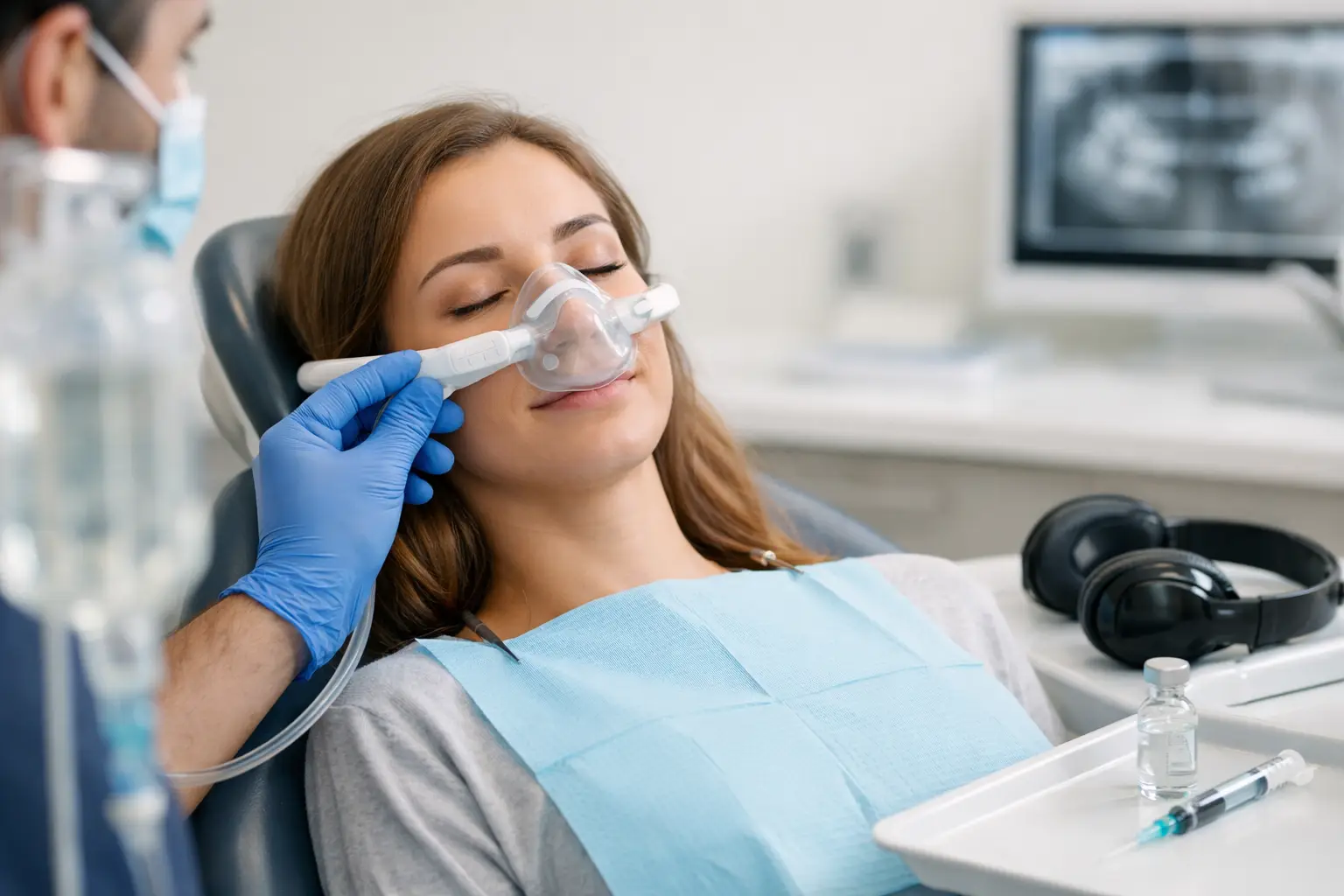
Nitrous oxide, sometimes called laughing gas, is inhaled through a small mask placed over the nose. It often creates a light, floating, relaxed feeling within minutes. You remain awake and able to communicate with the dental team.
One advantage of nitrous oxide is that its effects usually wear off quickly once the mask is removed. Many patients can return to their normal activities afterward, although your dentist will give you personalized instructions. It can be a good fit for mild to moderate anxiety, a sensitive gag reflex, or patients who simply want to take the edge off a routine procedure.
Its limitation is that it may not provide enough relief for severe anxiety or lengthy, complex treatment. If the thought of sitting through an appointment causes panic, or if you have avoided dentistry for years, a deeper level of sedation may be more appropriate.
Oral Sedation: A Calmer, Sleepier Experience
Oral sedation involves taking prescribed medication before your appointment. The medication is intended to help you feel significantly more relaxed and drowsy than you would with nitrous oxide alone. You may still be awake, but time can feel as though it passes quickly, and many patients have limited memory of the visit.
Because oral sedation can affect coordination and judgment for several hours, you will need a responsible adult to drive you to and from the office and stay with you as directed. Plan to rest for the remainder of the day rather than returning to work, making important decisions, or operating machinery.
Oral sedation can be helpful for moderate anxiety, a strong gag reflex, or longer appointments. However, the timing and depth of the effect can vary from person to person. Your dentist will provide specific instructions about when to take the medication, whether you can eat or drink beforehand, and which regular medications to discuss in advance.
IV Sedation: Deeper Comfort With Close Monitoring
IV sedation is administered through a small intravenous line and allows the dental team to adjust the medication level during treatment. Patients often enter a deeply relaxed state and may have little or no memory of the procedure. Although many people remain able to respond to verbal cues, they typically feel far removed from the sights, sounds, and sensations that cause anxiety.
This option can be especially valuable for patients with significant dental fear, previous traumatic dental experiences, difficulty becoming numb, a pronounced gag reflex, or extensive treatment needs. It may also help a dentist complete several procedures in fewer visits when that approach is clinically appropriate.
IV sedation requires careful planning and monitoring. Your health history, current medications, allergies, and airway considerations all matter. You will need an adult escort to bring you home, and you should expect to rest afterward. Art of Smiles is the only IV sedation dental office in the area, offering local patients an advanced option when a higher level of comfort is needed.
How Your Dentist Decides What Is Safe
Sedation is not selected from a menu based on preference alone. A responsible recommendation begins with a thorough review of your medical history. Be candid about conditions such as sleep apnea, breathing problems, heart disease, diabetes, pregnancy, liver or kidney concerns, and past reactions to anesthesia or sedation.
Your dentist also needs a complete list of prescription medications, over-the-counter products, vitamins, and supplements. Even products that seem unrelated to dentistry can affect how sedative medications work. Sharing this information is one of the most practical ways to support a safe, comfortable experience.
The planned procedure matters as well. A patient having a single filling may need little or no sedation, while someone receiving multiple implants, extractions, or a full-mouth restoration may benefit from a more comprehensive comfort plan. The goal is never to use more sedation than necessary. It is to use the appropriate level for safe, efficient, compassionate care.
What to Expect Before and After a Sedated Visit
Before your appointment, follow every preparation instruction closely. You may be asked to avoid food or drinks for a certain period, arrange transportation, wear comfortable clothing, or pause specific medications only if your medical providers advise it. Do not drink alcohol or take medication not specifically approved by your dental team before treatment.
During care, the team will monitor you and remain focused on your comfort and safety. If you are awake enough to communicate, you can still signal if you need a break. Many anxious patients find it reassuring to agree on a simple hand signal before treatment begins.
After oral or IV sedation, grogginess can last for the rest of the day. Have your escort take you home, avoid driving, and give yourself permission to rest. Follow post-treatment instructions for pain control, eating, oral hygiene, and any temporary restrictions. Call the office promptly if you have concerns about your recovery or experience symptoms that were not discussed as expected.
Questions Worth Asking at Your Consultation
A comfortable experience starts with a conversation, not a rushed decision. Ask which option fits your procedure and anxiety level, how deeply sedated you are expected to be, who will monitor you, and what you need to arrange at home. You can also ask about the expected recovery time and whether treatment can be completed in fewer visits.
Be open about what makes you nervous. You do not need to minimize your fear or feel embarrassed by it. Whether you are concerned about pain, gagging, loss of control, or simply how long you have been away from the dentist, those details help your care team create a plan that respects you.
The first step can be as simple as scheduling a conversation. When you are heard, informed, and treated with genuine care, dental treatment can begin to feel less like a source of fear and more like a meaningful investment in your health and your smile.
