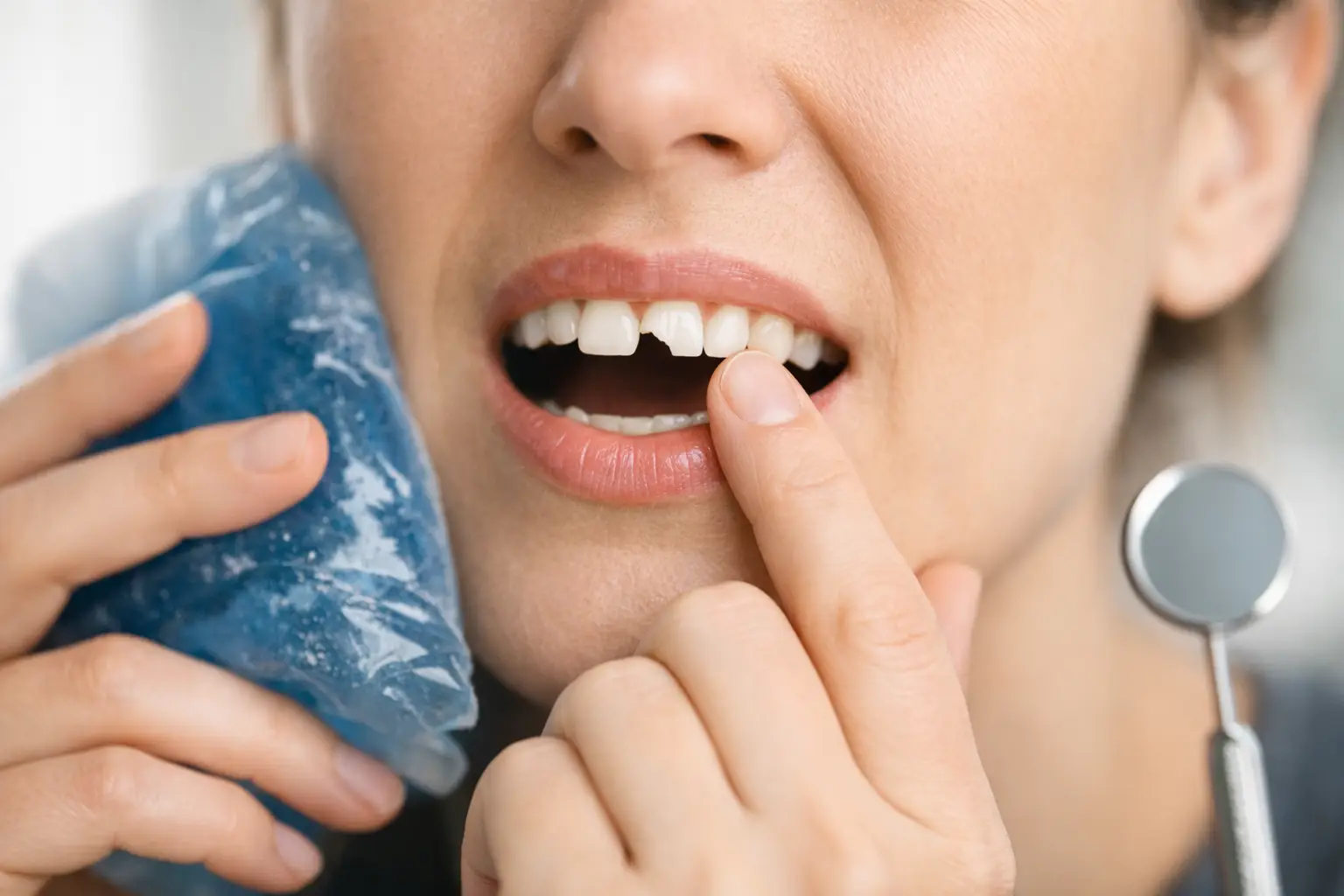
A broken tooth can happen in one sharp second: a hard popcorn kernel, a fall, an old filling that gives way, or a sudden bite on something you did not expect. Knowing how to handle a broken tooth can protect the tooth, ease discomfort, and give your dentist more options to restore your smile. The goal is not to fix it yourself. It is to stay calm, protect the area, and arrange professional care as soon as possible.
Even a small chip deserves attention. Teeth do not repair themselves, and a crack or fracture can deepen with normal chewing. Prompt treatment often means a simpler, more comfortable repair.
How to Handle a Broken Tooth Right Away
Start by gently rinsing your mouth with warm water. This clears away blood, food particles, and small pieces of tooth while allowing you to see the area more clearly. If the tooth is bleeding, place clean gauze over the spot and apply gentle pressure for about 10 minutes. A piece of clean, damp cloth can work if gauze is not available.
If you can find a broken piece of tooth, keep it. Place it in a clean container with milk or saliva, if possible, and bring it to your appointment. In some cases, especially with a front tooth, your dentist may be able to bond the original fragment back into place. Do not scrub the piece or wrap it in tissue, where it can dry out or be accidentally discarded.
A cold compress against the outside of your cheek can limit swelling and help with soreness. Use it for 15 to 20 minutes at a time, with a thin cloth between the cold pack and your skin. If you need pain relief, an over-the-counter medication may help when taken as directed and when it is safe for you based on your health history.
Until you are seen, avoid chewing on the injured side. Choose soft foods such as yogurt, scrambled eggs, soup that has cooled to a safe temperature, or mashed potatoes. Very hot, very cold, sugary, or acidic foods may trigger sensitivity if the inner layer of the tooth is exposed.
What Not to Do With a Broken Tooth
A rough or sharp edge can feel alarming, particularly when it catches your tongue or cheek. Dental wax, available at many pharmacies, can temporarily cover the edge. Sugar-free gum may be used briefly if wax is unavailable, but it is not a substitute for treatment.
Do not use household glue, craft adhesive, or a temporary repair kit as a way to reattach a tooth fragment. These materials can irritate oral tissues, trap bacteria, and make professional treatment more difficult. Avoid placing aspirin directly on the tooth or gums as well. Aspirin can burn soft tissue and will not treat the cause of the pain.
Try not to test the tooth by biting down repeatedly to see whether it still hurts. A cracked tooth can worsen under pressure. It is also wise to avoid alcohol-based mouth rinses if the area is raw or bleeding, since they may sting and irritate the tissues.
When a Broken Tooth Is a Dental Emergency
Any broken tooth should be evaluated promptly, but some symptoms call for same-day emergency dental care. Contact a dentist right away if you have severe or persistent pain, swelling in your face or gums, uncontrolled bleeding, a loose tooth, or a fracture that exposes a red, pink, or dark area inside the tooth.
Seek urgent medical attention if a facial injury causes difficulty breathing or swallowing, heavy bleeding that does not slow with pressure, loss of consciousness, vomiting, or signs of a possible jaw fracture. A broken tooth after a serious fall, sports injury, or vehicle accident may involve more than the tooth alone.
A tooth can also be damaged without dramatic pain. Fine cracks often cause discomfort only when you release your bite, eat something cold, or chew certain foods. If a tooth feels different, has a new rough edge, or hurts intermittently after an impact, schedule an examination rather than waiting for the symptoms to become severe.
Why Quick Care Makes a Difference
The outside of a tooth is covered by enamel, but beneath it is dentin, a more sensitive layer filled with tiny channels. A deeper fracture can expose dentin and, in some cases, reach the pulp, where the tooth’s nerve and blood supply are located. Bacteria can enter through that opening and lead to infection, swelling, or increasing pain.
Early care may preserve more healthy tooth structure. A minor chip may only need gentle smoothing or cosmetic bonding. A larger break may require a filling or a custom crown to strengthen what remains. If the pulp has been affected, root canal treatment can remove infection and help save the tooth before it is restored with a crown.
Sometimes a tooth is fractured too far below the gumline to be predictably repaired. When that happens, extraction may be the healthiest choice. Modern replacement options, including dental implants, can restore chewing function and the natural appearance of your smile. The right recommendation depends on the location and depth of the break, the condition of the root, your bite, and your long-term dental health.
What to Expect at Your Dental Visit
Your dentist will begin by listening to what happened and asking about pain, sensitivity, and changes in your bite. A careful examination and digital X-rays help reveal whether the damage is limited to the visible part of the tooth or extends into the root or surrounding bone.
Comfort should be part of the conversation. Local anesthetic can keep treatment pain-free, and patients who feel anxious or need more extensive care may benefit from sedation options. There is no need to push through fear or embarrassment. A broken tooth is a common dental problem, and a compassionate dental team can explain each step before treatment begins.
Depending on the diagnosis, many repairs can be completed in one visit. More complex restorations, such as a crown, may require a temporary restoration while a custom option is made. If infection is present, your dentist will discuss the appropriate sequence of care and how to protect the tooth in the meantime.
Can You Prevent Another Broken Tooth?
Not every fracture is avoidable, but recurring chips and cracks can be a clue that your teeth are under too much pressure. Nighttime grinding, clenching during the day, a misaligned bite, large older fillings, and chewing ice or hard candy all raise the risk.
A custom night guard can protect teeth from grinding forces while you sleep. Replacing worn restorations, correcting bite issues when appropriate, and using a sports mouthguard for contact activities can also reduce the chance of future damage. Do not use your teeth to open packaging, cut fishing line, or hold objects when your hands are full. Teeth are strong, but they are not tools.
If you are in Vero Beach and have chipped, cracked, or broken a tooth, Art of Smiles can help you move from uncertainty to a clear, personalized treatment plan. A timely call can be the first step toward protecting your comfort, your oral health, and the smile you rely on every day.
