A cracked tooth can make every bite feel uncertain. You may notice a sharp twinge when chewing, sensitivity to temperature, or pain that seems to come and go without warning. So, can crowns fix cracked teeth? In many cases, yes. A dental crown can hold a damaged tooth together, protect it from further pressure, and help you eat and smile comfortably again. The right treatment, however, depends on where the crack is, how deep it extends, and whether the tooth’s nerve and root are healthy.
Why a cracked tooth deserves prompt care
Teeth are strong, but they are not indestructible. Years of biting, grinding, large older fillings, hard foods, injuries, and natural wear can create small fractures. Some cracks remain on the surface of the enamel and cause no symptoms. Others spread deeper into the tooth, where they can expose sensitive tissue or allow bacteria to enter.
The challenge is that a crack does not heal on its own like a broken bone. Each time you bite down, the two sides of the tooth may flex slightly. That repeated movement can make a small crack longer, deeper, and more painful. Addressing the problem early may help preserve more of your natural tooth and prevent a more involved procedure later.
Call your dentist if you have pain when chewing, sudden sensitivity to hot or cold foods, swelling near a tooth, or a rough or sharp edge you can feel with your tongue. Even if the discomfort fades, the underlying issue may still be present.
Can crowns fix cracked teeth by holding them together?
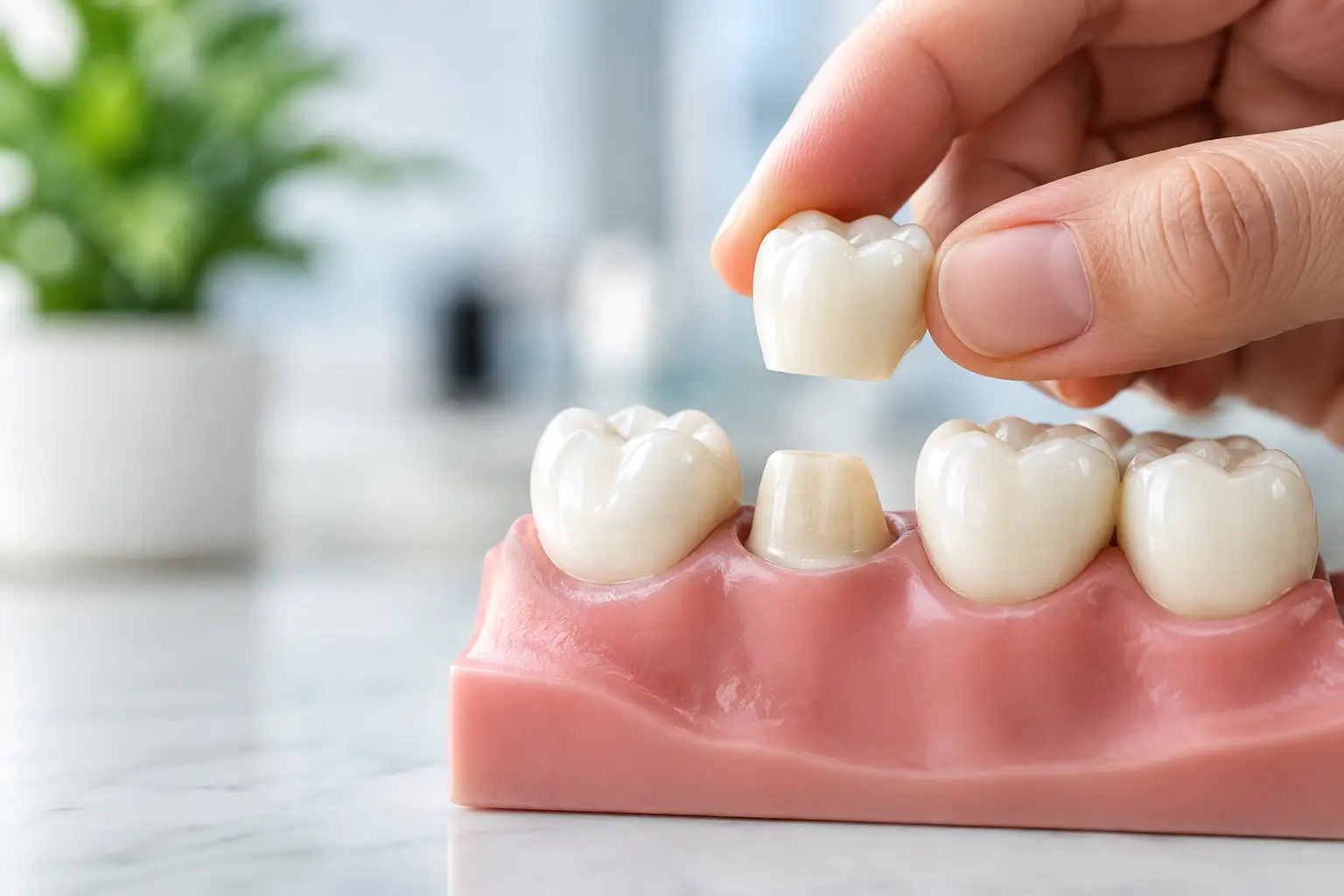
A dental crown is a custom restoration that covers the visible portion of a tooth. Think of it as a precisely fitted protective shell. Once placed, it redistributes biting forces across the tooth instead of allowing pressure to concentrate along the crack.
For a crack that has not traveled too far below the gumline or into the root, a crown can be an excellent long-term solution. It protects the remaining tooth structure, restores a natural shape, and can be color-matched to blend with your smile. Modern crowns are designed to look refined while standing up to the demands of everyday chewing.
A crown does not literally fuse a crack back together. Rather, it stabilizes the tooth and helps prevent the crack from worsening. That distinction matters because the success of a crown depends on the tooth having enough healthy structure and a stable foundation beneath it.
When a crown is often the right answer
Crowns are commonly recommended for a tooth with a cracked cusp, a large fracture around an old filling, or a tooth weakened by heavy grinding. They are also frequently used after root canal treatment. In these situations, the tooth may still be very saveable, but it needs full coverage to reduce the risk of breaking.
For example, a molar with a large filling may develop a crack along one of its chewing points. If the crack is limited to that portion of the tooth, your dentist may remove the weakened area and place a crown to reinforce what remains. Prompt treatment can often stop the cycle of pain and protect your ability to chew normally.
When a crown alone may not be enough
Not every crack can be solved with a crown alone. If the crack has reached the pulp, which contains the tooth’s nerve, bacteria and inflammation can lead to persistent pain or infection. Root canal treatment may be needed before the crown is placed. This removes infected or irritated tissue inside the tooth, then the crown protects the tooth afterward.
A crack that extends below the gumline may be more difficult to restore. When a fracture continues down the root, the tooth may not be predictable to save. In some cases, removing the tooth and discussing a replacement such as a dental implant is the healthiest option. While this can be disappointing, choosing the most dependable treatment protects your overall oral health and helps avoid repeated emergency care.
Your dentist will also distinguish between a cracked tooth and a split tooth. A cracked tooth has a fracture line but remains mostly intact. A split tooth has separated into distinct pieces and is often less likely to be restored successfully. The earlier a crack is evaluated, the more options you may have.
How your dentist determines the best treatment
Cracks can be difficult to spot, especially when they are small or hidden beneath an existing restoration. A careful evaluation includes discussing when the discomfort occurs, examining the tooth, and checking your bite. Dental X-rays can reveal concerns around the root or bone, although fine cracks themselves do not always appear on an X-ray.
Your dentist may use magnification, special lighting, bite testing, or dye to better locate the fracture. Just as importantly, they will evaluate the health of the tooth’s nerve and the surrounding gums. This thorough approach helps avoid placing a crown on a tooth that needs additional treatment first.
At Art of Smiles, treatment recommendations are based on your individual tooth, your comfort, and your long-term goals. You should understand what the dentist sees, why a particular approach is recommended, and what alternatives may be available before moving forward.
What getting a crown for a cracked tooth feels like
For many patients, concern about treatment is as real as concern about the tooth itself. The process is designed to be comfortable and carefully paced. Your dentist will numb the area, gently prepare the damaged tooth, and take detailed impressions or digital scans for a custom crown. A temporary crown may protect the tooth while the final restoration is made.
At the placement visit, the final crown is checked for fit, color, and bite before it is secured. A properly fitted crown should feel natural when you close your teeth together. Mild tenderness for a few days is possible, particularly if the tooth was already inflamed, but ongoing pain should always be reported.
If dental anxiety has kept you from seeking care, tell the dental team before your appointment. Comfort options, including sedation for appropriate patients, can make treatment feel far more manageable. You deserve care that respects both your oral health and your peace of mind.
Protecting a crowned tooth over time
A crown is durable, but it still depends on healthy gums, a healthy root, and consistent care. Brush twice daily with fluoride toothpaste, clean between your teeth every day, and keep regular professional checkups. Although the crown itself cannot decay, the natural tooth around its edges can still develop cavities.
If you grind or clench your teeth, a custom night guard may help protect both your crown and your other teeth from excess force. Avoid using your teeth to open packages, and use care with ice, hard candy, popcorn kernels, and other foods that can place sudden pressure on a restoration.
If a crown feels high when you bite, becomes loose, or is followed by new sensitivity, schedule a visit rather than waiting. Small adjustments or early repairs can prevent larger concerns.
A cracked tooth is rarely something to watch and hope will improve. A timely examination can reveal whether a crown can protect your natural tooth or whether another treatment will give you a healthier, more lasting result. The goal is not simply to cover a problem, but to help you return to eating, speaking, and smiling with confidence.
