When every meal requires planning, dentures shift at the wrong moment, or missing teeth make you reluctant to smile in photos, the problem reaches far beyond appearance. A complete guide to full mouth dental implants should begin with what patients truly want: teeth that feel secure, look natural, and allow them to live with more comfort and confidence.
Full mouth implant treatment can be life-changing, but it is also highly personal. The right plan depends on your oral health, bone structure, goals, medical history, and comfort needs. A careful evaluation helps ensure that your new smile is designed for long-term health, not simply a quick cosmetic change.
What Are Full Mouth Dental Implants?
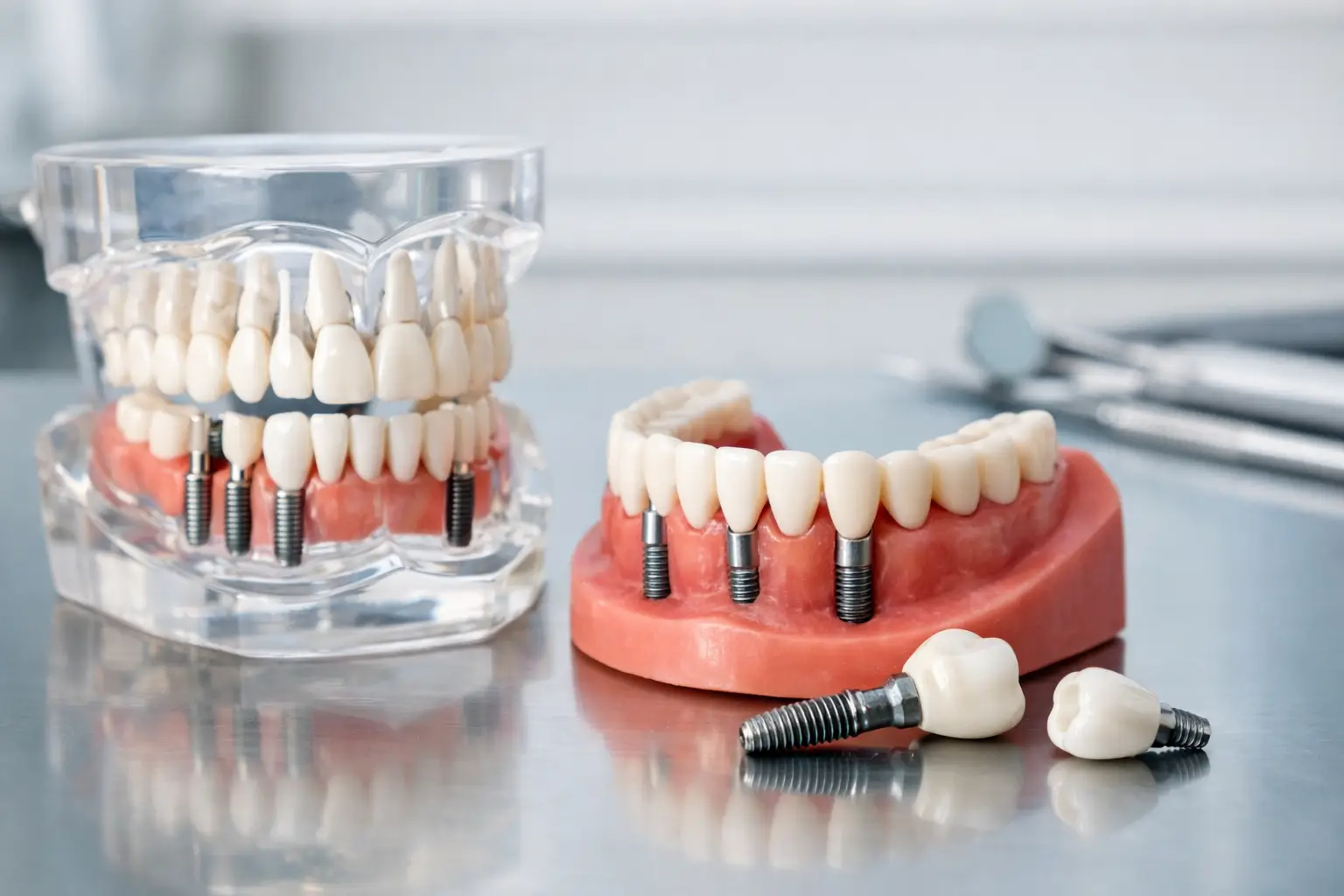
Full mouth dental implants replace all of the teeth in the upper arch, lower arch, or both. Instead of relying on the gums alone for support, titanium implant posts are placed in the jawbone to serve as secure tooth roots. A custom full-arch bridge or denture is then attached to those implants.
This approach differs from traditional removable dentures. While conventional dentures rest on the gums and may move during eating or speaking, implant-supported teeth are anchored in place. The result can improve stability, chewing ability, speech, facial support, and everyday peace of mind.
Full mouth treatment does not always mean one implant for every missing tooth. In many cases, a full arch can be supported by four, five, or six strategically placed implants. All-on-4® treatment is one well-known approach that uses four implants to support a fixed full-arch restoration when appropriate.
Who May Be a Candidate for a Full Mouth Implant Solution?
People often explore full mouth implants after years of dental concerns have added up. You may be a candidate if you have many missing teeth, failing crowns or bridges, advanced tooth decay, severe gum disease, or dentures that no longer feel secure. Some patients still have teeth, but those teeth are damaged beyond predictable repair and may be better replaced as part of a comprehensive plan.
Healthy gums and sufficient jawbone are helpful, but they are not the only factors. Modern planning techniques and implant placement strategies can make treatment possible for many people who have been told they do not have enough bone. In some situations, bone grafting, treatment for gum disease, or a healing period may be recommended before implants are placed.
Your overall health matters, too. Conditions such as uncontrolled diabetes, certain autoimmune disorders, or heavy tobacco use can affect healing and implant success. These concerns do not automatically rule out treatment, but they should be discussed openly so your dentist can create the safest plan.
The Complete Guide to Full Mouth Dental Implants: The Treatment Process
The process begins with a detailed consultation, not a one-size-fits-all recommendation. Your dentist reviews your health history, examines your teeth and gums, and uses advanced imaging to evaluate the jawbone, bite, and facial structure. This information helps determine whether implants are the right choice and how your new teeth should look and function.
If damaged teeth need to be removed, extractions may be completed during the implant procedure. Implant posts are then placed in carefully planned positions within the jaw. Depending on your case, you may receive a temporary full-arch restoration the same day or soon after surgery. This temporary bridge allows you to leave with teeth while your implants begin to heal.
Over the next several months, the bone integrates with the implant posts in a process called osseointegration. During this time, you will follow a modified diet and attend follow-up visits so your healing can be monitored. Once the implants are stable, your final bridge is designed to fit comfortably, support your bite, and complement your facial features.
Same-day teeth can be an excellent option, but the phrase can be misunderstood. It usually means you receive a temporary fixed restoration on the day of implant surgery, not the final teeth that you will wear for years. Your permanent bridge is made after healing and is tailored for long-term fit, function, and esthetics.
Choosing Between Fixed Teeth and Implant-Supported Dentures
One of the most meaningful decisions is whether you want a fixed full-arch bridge or a removable implant-supported denture. A fixed bridge stays in place and is removed only by a dental professional. Many patients prefer the familiar feeling of brushing teeth that do not come out at night.
An implant-supported denture attaches to implants for improved stability but can be removed for cleaning. It can be a practical option for some patients, particularly when bone availability, budget, or hygiene needs make a removable design more suitable.
Neither option is automatically better. Fixed teeth often offer the greatest sense of permanence, while removable implant dentures can provide strong support with a different cost and maintenance profile. Your dentist should explain how each choice will affect daily cleaning, repairs, appearance, and long-term care.
Comfort Matters Before, During, and After Treatment
Fear of pain keeps many people from seeking the care that could improve their quality of life. Full mouth implant treatment is carefully planned with comfort in mind, including effective local anesthesia and sedation options when appropriate. For patients with significant anxiety, a strong gag reflex, or complex treatment needs, IV sedation can provide a deeply relaxed experience under close professional monitoring.
After surgery, it is normal to have some swelling, tenderness, and fatigue for several days. Most patients manage these symptoms with prescribed or recommended medication, cold compresses, rest, and soft foods. Your care team will provide detailed instructions and should remain available if you have concerns during recovery.
At Art of Smiles, comfort-focused planning is part of the conversation from the beginning, especially for patients who have avoided dentistry because of difficult past experiences. You deserve explanations that are clear, honest, and free of pressure.
What Do Full Mouth Dental Implants Cost?
The cost of full mouth implants varies because every smile requires a different level of care. Your treatment estimate may include diagnostic imaging, extractions, implant surgery, sedation, temporary teeth, the final bridge, follow-up visits, and any needed bone or gum treatment.
A lower initial price does not always reflect the full cost of care. Ask what material will be used for the final bridge, whether temporary and permanent restorations are included, how many implants are planned, and what happens if an adjustment or repair is needed later. High-quality materials, experienced clinical planning, and reliable follow-up care are meaningful parts of the investment.
Many practices offer financing options that can make treatment more manageable. During a consultation, it is reasonable to ask for a clear written estimate and to discuss priorities if treatment must be phased.
Caring for Your New Smile
Implants cannot develop cavities, but the tissues around them still need consistent care. Brush your bridge and gums daily, clean beneath the restoration with the tools recommended by your dentist, and keep regular professional hygiene visits. These appointments allow your dental team to check the implant tissues, bite, bridge condition, and overall oral health.
Avoid using your new teeth to open packages or bite very hard objects. If you grind or clench, a nightguard may be recommended to protect the restoration. With attentive hygiene and regular maintenance, full mouth implants can provide many years of dependable function.
The best next step is not committing to a procedure before you have the facts. It is scheduling a thoughtful consultation where you can share what has been difficult, ask every question, and learn whether a personalized implant plan can help you eat, speak, and smile with greater ease again.
