A missing tooth changes more than a photograph. It can make chewing feel uncertain, affect the way you speak, and leave you wondering whether other teeth will shift. When considering a dental bridge vs implant, the right answer is not simply the fastest or least expensive option. It is the option that supports your health, comfort, appearance, and goals for the years ahead.
At Art of Smiles, treatment begins with a careful conversation and a detailed evaluation of your smile. Whether you are replacing one tooth or planning more extensive restoration, you deserve clear answers and care that feels calm from the start.
Dental Bridge vs Implant: The Essential Difference
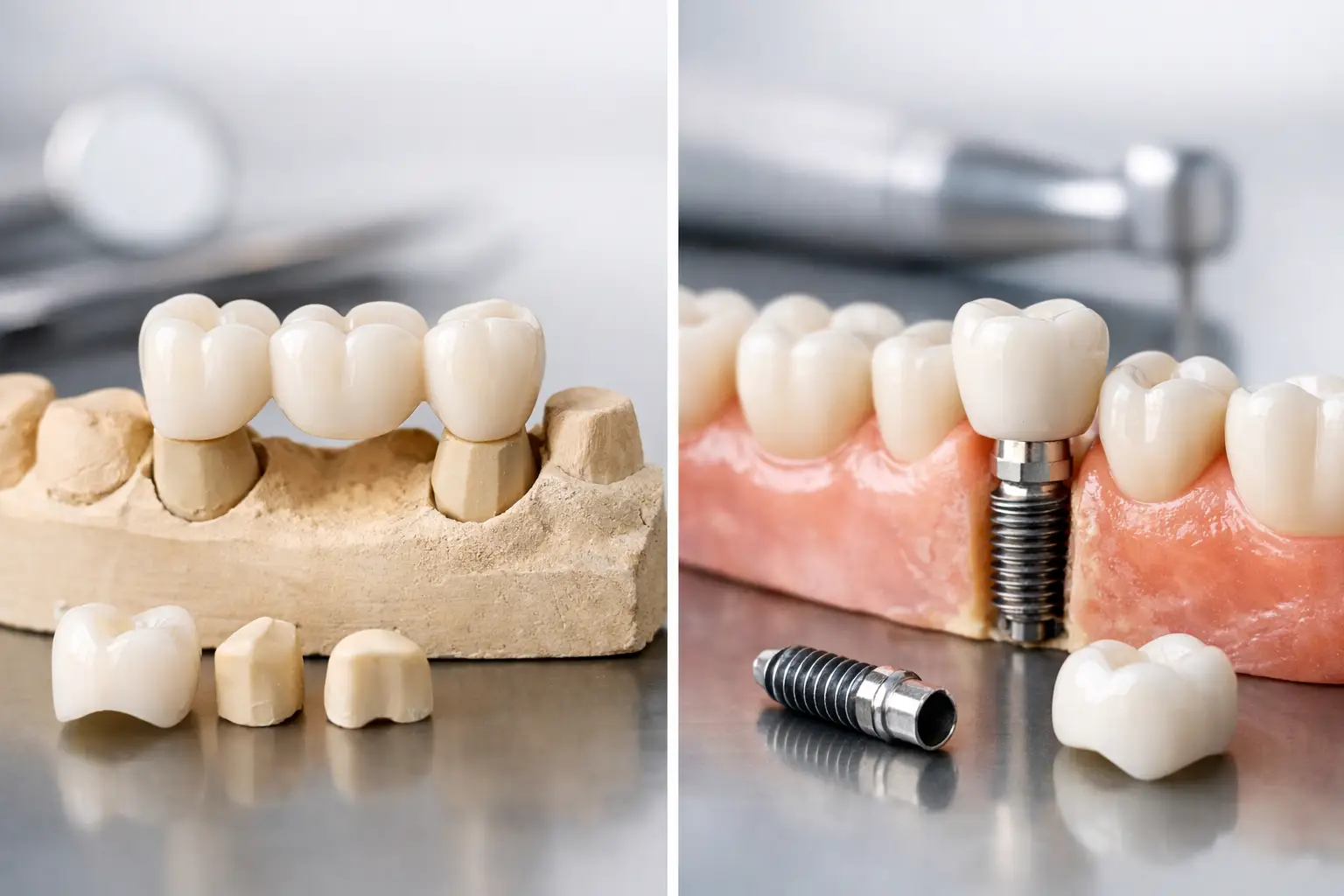
A dental bridge replaces a missing tooth by connecting a lifelike replacement tooth, called a pontic, to crowns on the teeth beside the gap. The neighboring teeth support the restoration, creating a fixed solution that does not come out at night.
A dental implant replaces the tooth root as well as the visible tooth. A small titanium implant post is placed in the jawbone, where it gradually integrates with the bone. Once healed, it supports an abutment and custom crown designed to blend with your natural teeth.
Both options can restore your smile beautifully. The biggest distinction is where the support comes from: a bridge relies on adjacent teeth, while an implant stands independently in the jawbone.
When a Dental Bridge May Be the Right Choice
A bridge can be an excellent, dependable choice for many patients. Because it usually does not require surgical implant placement or a healing period for bone integration, treatment can often be completed more quickly. That can matter if the missing tooth is visible, if chewing has become difficult, or if you need a practical solution on a shorter timeline.
A bridge may also make particular sense when the teeth on either side of the gap already need crowns because of large fillings, fractures, or extensive wear. In that situation, restoring those teeth and replacing the missing tooth with one connected restoration can be efficient and attractive.
The procedure generally involves preparing the supporting teeth, taking precise impressions or digital scans, and placing a temporary bridge while your final restoration is created. At the final appointment, the bridge is adjusted for comfort and securely cemented.
The trade-off is that a traditional bridge requires reshaping the neighboring teeth, even if they are otherwise healthy. It also does not replace the missing tooth root. Over time, the bone beneath the gap may gradually shrink because it is no longer receiving the stimulation that a natural root provides.
With excellent home care and regular dental visits, a well-made bridge can serve a patient for many years. Still, cleaning beneath the replacement tooth takes specific attention. Your dental team may recommend floss threaders, an interdental brush, or a water flosser to help keep the area clean and protect the supporting teeth.
Why an Implant Can Be a Long-Term Investment
An implant is often the closest option to replacing a natural tooth. Because it stands on its own, it can preserve neighboring teeth without requiring crowns on them. The implant post also provides stimulation to the jawbone during chewing, which can help reduce bone loss in that area.
After implant placement, the body needs time to heal and allow the implant to integrate with the bone. For some patients, a temporary tooth can be provided during this period, especially when the missing tooth is in a visible area. The exact timeline varies based on healing, bone quality, the location of the tooth, and whether additional procedures are needed.
Once complete, an implant-supported crown is stable, natural-looking, and cared for much like a natural tooth. You still need daily brushing, flossing, and routine professional care. An implant cannot develop a cavity, but the gum and bone around it can become inflamed if plaque is allowed to accumulate.
Implants are not automatically right for everyone. Adequate bone, healthy gums, and overall medical stability are all part of determining candidacy. Long-term smoking, uncontrolled diabetes, certain medications, gum disease, and teeth grinding may affect treatment planning or success. These factors do not always rule out implants, but they deserve an honest, individualized discussion.
Comparing Cost, Time, and Daily Comfort
Cost is often one of the first questions patients ask, and it is a fair one. A bridge usually has a lower upfront cost than a single implant because it involves fewer treatment stages. Insurance coverage may also differ between bridges and implants. However, the initial fee is only one part of the decision.
An implant may have a higher initial investment, particularly if bone grafting or other preparatory treatment is necessary. Yet it can offer meaningful long-term value by leaving adjacent healthy teeth untouched and potentially reducing the need for future work on those teeth. A bridge may eventually need replacement, and replacing it can become more complex if a supporting tooth develops decay or a crack.
Time is another meaningful difference. A bridge is commonly completed in a few appointments over several weeks. Implant treatment can take several months from placement to final crown because healing is a necessary part of the process. Neither timeline is inherently better. The appropriate pace depends on your oral health, your preferences, and what will provide the most predictable result.
In everyday life, both choices can feel comfortable and look natural when carefully planned. Implant crowns are often easier to clean between because they are separate from neighboring teeth. A bridge requires a little more attention underneath the pontic, but many patients quickly adapt their hygiene routine.
Questions That Help Clarify Your Best Option
The most useful decision is made after looking beyond the empty space. Your dentist will consider the health of the teeth next to it, the amount of available bone, the condition of your gums, your bite, and the location of the missing tooth. A back tooth that handles heavy chewing forces may call for a different approach than a front tooth where appearance is the primary concern.
It also helps to think about your future dental goals. If you prefer to avoid altering healthy teeth and are comfortable with a longer treatment process, an implant may be appealing. If your neighboring teeth already need crowns, you want a shorter path to a fixed replacement, or surgery is not a good fit for your health needs, a bridge may be the wiser choice.
Patients who feel anxious about treatment should not have to make decisions through fear. Modern imaging, thoughtful planning, local anesthetic, and sedation options can make restorative care far more manageable. For appropriate candidates, IV sedation can provide an especially relaxed experience during more involved treatment. Your comfort, medical history, and level of anxiety should be part of the conversation from the beginning.
What if More Than One Tooth Is Missing?
The same principles apply, but the treatment options expand. An implant-supported bridge can replace multiple missing teeth without placing an implant for every tooth. When many or all teeth are missing, full-arch solutions such as All-on-4® may restore a secure, functional smile with a carefully planned number of implants.
These decisions require a comprehensive examination rather than a one-size-fits-all recommendation. Digital imaging and a close look at your bite help determine what will be stable, comfortable, and aesthetically balanced.
Do Not Wait Too Long to Ask
After a tooth is lost, nearby teeth can drift toward the space, opposing teeth may move out of position, and bone can begin to change. This does not mean you must rush into treatment before you feel ready. It does mean an early consultation can give you more choices and a clearer plan, even if you decide to move forward later.
A beautiful replacement tooth should do more than fill a gap. It should help you eat, speak, smile, and feel at ease again. A personal evaluation can turn uncertainty into a plan that respects both your long-term oral health and your comfort at every step.
