A lower denture that lifts while you speak or a full upper plate that covers your palate can change more than mealtimes. It can make social occasions, favorite foods, and everyday confidence feel uncertain. This guide to implant supported dentures explains how this treatment can provide a more stable foundation for a full smile, what the process involves, and how to decide whether it may be right for you.
What Are Implant Supported Dentures?
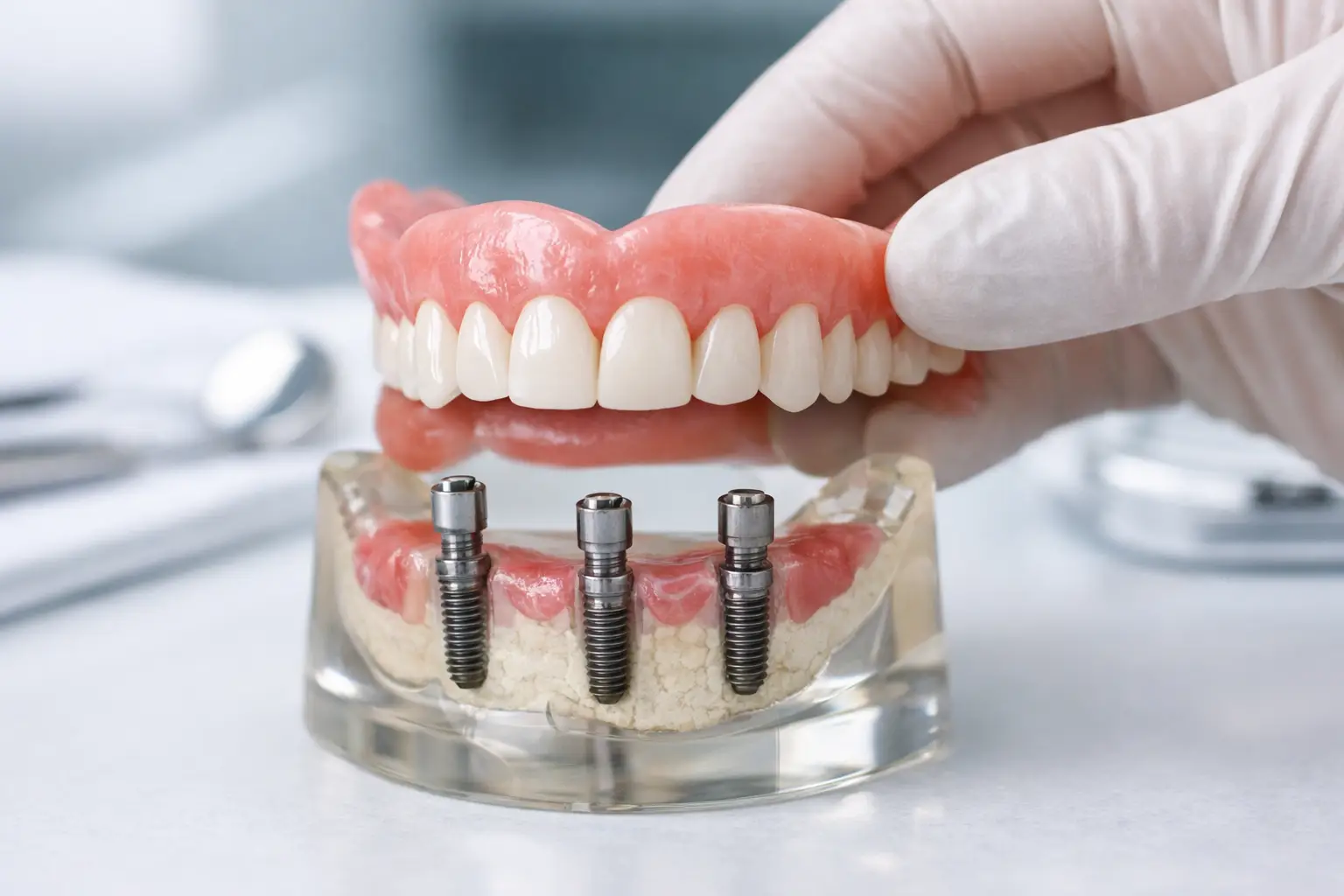
Implant supported dentures are full-arch replacement teeth that attach to dental implants placed in the jawbone. Unlike traditional removable dentures, which rest on the gums, implants provide anchors beneath the surface. The denture may snap into place for removal at home, or it may be fixed in place and removed only by a dentist for maintenance.
Dental implants are small posts that take the place of missing tooth roots. As the bone heals around them, they create a stable base for a custom denture. This design can reduce slipping, improve chewing ability, and help the replacement teeth feel more secure during conversation.
It is helpful to distinguish implant supported dentures from replacing each missing tooth with a separate implant and crown. Both options use implants, but a full-arch denture is designed to replace an entire upper or lower set of teeth. For many patients with extensive tooth loss, it offers a practical balance of strength, appearance, and treatment efficiency.
Why Stability Changes Daily Life
Traditional dentures have helped many people restore their smiles, but they have limits. They can shift under pressure, require adhesive, and place direct pressure on sensitive gums. Lower dentures are especially likely to move because the tongue and jaw muscles are constantly at work.
With implant support, the biting forces are shared through the implants rather than relying only on the gums. Patients often find it easier to enjoy a wider range of foods, speak with greater confidence, and worry less about a denture moving at an inconvenient moment. The treatment can also help preserve jawbone, since bone tends to shrink over time after teeth are lost.
That does not mean every implant-supported option feels identical. A removable overdenture can be highly stable while still allowing you to take it out for cleaning. A fixed full-arch restoration offers the experience of teeth that remain in place, but it requires professional removal for periodic care. The best choice depends on your health, anatomy, preferences, and budget.
A Guide to Implant Supported Dentures: Your Main Options
The number of implants and the type of denture are tailored to the individual. In many cases, a lower removable denture is supported by two to four implants. The upper jaw may require more support because its bone is generally less dense. Fixed full-arch options, including All-on-4® treatment, commonly use several strategically positioned implants to support a complete bridge of teeth.
Removable implant overdentures
A removable overdenture attaches to implants using specialized connectors. It is much more secure than a conventional denture, but you remove it daily for cleaning. This can be a good option for patients who want improved stability and straightforward home care while keeping the investment lower than a fixed solution.
Fixed full-arch teeth
Fixed full-arch restorations are attached to implants and stay in place day and night. They can feel closer to natural teeth and do not cover the palate in the same way as many traditional upper dentures. They are an appealing option for people who want a complete, non-removable smile, although they typically involve a greater financial commitment and careful professional maintenance.
Immediate teeth versus a staged approach
In some situations, temporary teeth can be placed on the same day as implant surgery. This may be possible when the implants achieve strong initial stability and your overall oral health supports it. Other patients benefit from a staged plan that allows more healing time before the final denture is made. A careful examination determines which path protects the long-term result rather than simply choosing the fastest timeline.
What the Treatment Process Usually Looks Like
The process begins with a detailed consultation. Your dentist reviews your medical history, discusses your goals, examines your gums and existing teeth, and uses advanced imaging to evaluate bone volume and implant placement. If you have failing teeth, gum disease, or an old denture that no longer fits, those concerns become part of the treatment plan.
Some people need preparatory care before implants can be placed. This might include removing damaged teeth, treating periodontal disease, or adding bone grafting when bone loss is significant. Bone grafting is not always necessary, especially when implants can be placed at an angle to use available bone, but it is sometimes the right choice for predictable support.
During the implant procedure, the posts are placed into the jawbone. Local anesthesia is used to keep the area numb. For patients who feel anxious about dental treatment or have complex needs, sedation can make the experience feel calmer and more manageable. At Art of Smiles, IV sedation is available for patients who may benefit from a deeper level of comfort during advanced dental care.
Healing follows implant placement. Over the next several months, the bone integrates with the implants in a process called osseointegration. You may wear a temporary denture during this time, with instructions to protect the healing sites. Once the implants are ready, impressions or digital scans are used to create your final restoration. The shape, tooth color, bite, and smile appearance are all considered so the result looks natural and supports comfortable function.
Who May Be a Good Candidate?
Many adults who are missing most or all of their teeth can be considered for implant-supported dentures. You may be a candidate if your current dentures move, you are tired of adhesive, you have multiple failing teeth, or you want a more secure long-term solution.
Good implant treatment is not based on age alone. Overall health, gum health, bone availability, medications, tobacco use, and healing ability matter more. People with diabetes, osteoporosis, a history of radiation therapy to the jaw, or certain medications may still be eligible, but their care should be planned thoughtfully with their medical team when needed.
Smoking can increase the risk of healing problems and implant failure. Untreated gum disease also needs attention before or alongside implant care. An honest conversation about these factors is not meant to rule you out. It helps your dentist build a plan that gives the treatment its best chance of lasting success.
Comfort, Recovery, and What to Expect
It is understandable to be concerned about discomfort, particularly if you have had a difficult dental experience in the past. Modern planning, anesthesia, and sedation options can make implant treatment far more comfortable than many patients expect. After surgery, tenderness and swelling are common for several days and are usually managed with prescribed or recommended medications, a soft-food diet, and specific home-care instructions.
Recovery is not exactly the same for everyone. A person receiving a few implants to stabilize an existing denture may have a simpler recovery than someone having teeth removed, bone grafting, and a full-arch restoration completed in stages. Following instructions matters: avoid chewing hard foods too early, keep the surgical areas clean as directed, and attend each follow-up appointment.
Caring for Implant Supported Dentures
Implants cannot get cavities, but the tissues around them still need daily attention. Plaque buildup can lead to inflammation and, over time, threaten implant health. Fixed teeth need brushing along the gumline and cleaning beneath the bridge with tools recommended by your dental team. A water flosser or specialized floss threader may be useful, but technique matters more than owning every product.
Removable implant dentures should be taken out and cleaned each day, along with the attachments and gums. Never use abrasive toothpaste or harsh household cleaners on the denture. Regular professional visits are equally important. Your dentist can check the implant tissues, bite, attachment wear, and the condition of the denture before small problems become larger ones.
Understanding Cost and Long-Term Value
The cost of implant supported dentures varies because no two mouths require the same treatment. The total may include extractions, imaging, bone grafting, sedation, implant surgery, temporary teeth, the final denture, and follow-up care. A removable overdenture generally costs less than a fixed full-arch restoration, but the right decision should account for your daily comfort, maintenance needs, and long-term goals.
When comparing options, ask what is included in the proposed plan, what type of final restoration is planned, how future maintenance is handled, and whether temporary teeth are part of the process. The lowest initial estimate is not always the best value if it leaves out essential planning or follow-up care. Clear answers allow you to make a confident decision without pressure.
A secure smile begins with a personal conversation, not a one-size-fits-all promise. If dentures have been limiting how you eat, speak, or feel about your appearance, a thoughtful implant consultation can help you see what is possible and choose a path that feels right for your health and your life.
