A missing tooth can change more than a photograph. It may make meals less enjoyable, affect the way you speak, or leave you covering your smile in conversation. The best treatments for missing teeth are not one-size-fits-all. The right choice depends on how many teeth are missing, the health of your gums and jawbone, your overall health, and what will help you feel comfortable and confident for years to come.
For some patients, a simple replacement is the right next step. For others, a more comprehensive plan can restore an entire smile and improve daily comfort in a meaningful way. A thoughtful dental evaluation helps turn a frustrating problem into a clear path forward.
Why Replacing Missing Teeth Matters
It is easy to postpone treatment when a missing tooth is in the back of the mouth or when a gap does not hurt. Yet neighboring teeth can gradually shift toward the open space. That movement can affect your bite, make teeth harder to clean, and create uneven pressure when you chew.
The jawbone also needs stimulation from tooth roots to maintain its shape. When a tooth is lost, the bone in that area can begin to shrink over time. This does not mean every patient needs immediate implant treatment, but it does make an early conversation worthwhile. Replacing missing teeth can help protect chewing function, facial support, and the long-term alignment of your smile.
Best Treatments for Missing Teeth: Your Main Options
Modern dentistry offers several reliable ways to replace a missing tooth or a full arch of teeth. Each option has strengths, limitations, and a different level of treatment involved.
Dental Implants
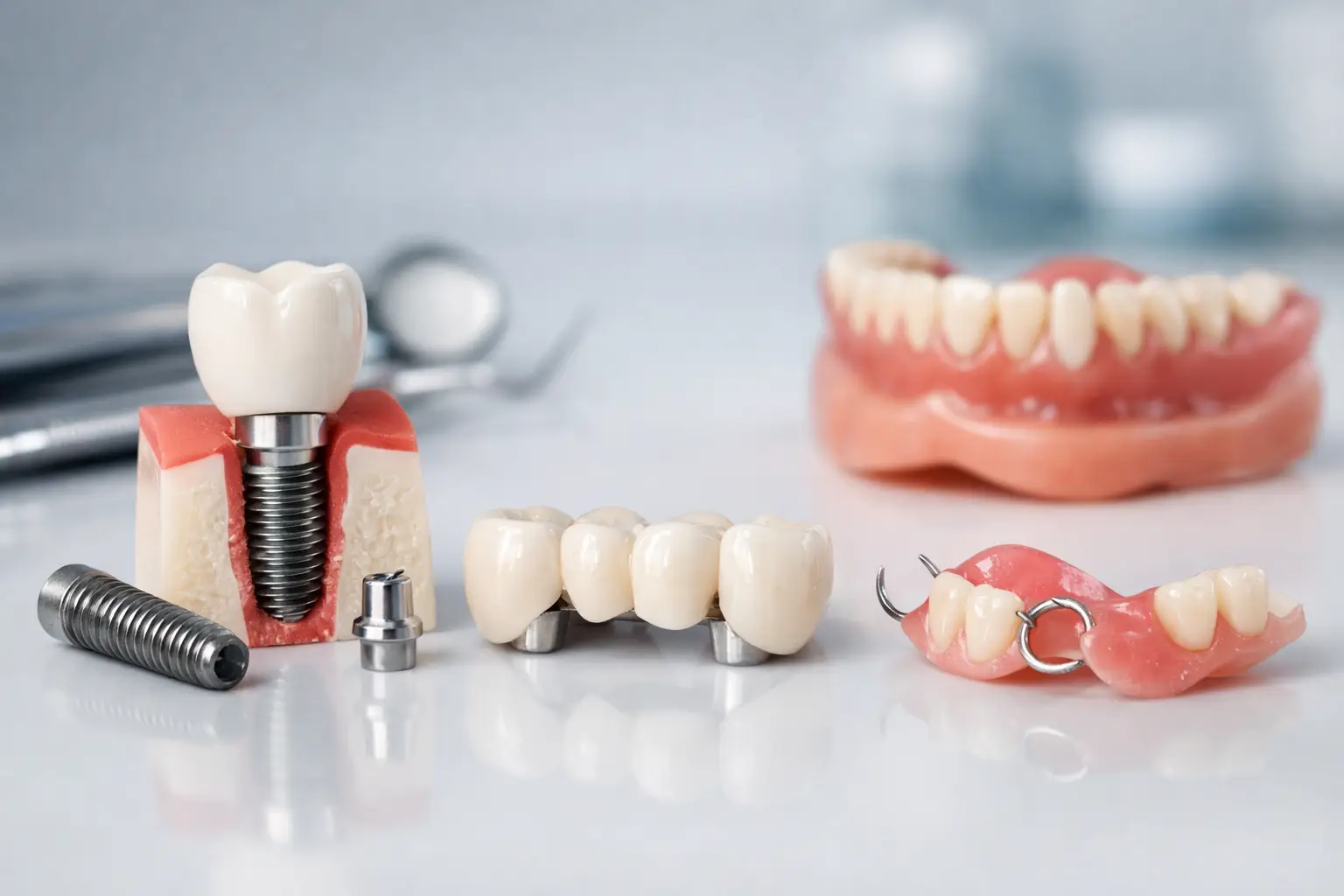
A dental implant replaces the root of a missing tooth with a small biocompatible post placed in the jawbone. Once it has healed and integrated with the bone, the implant can support a custom crown, bridge, or full-arch restoration.
For a single missing tooth, an implant with a crown often feels and functions much like a natural tooth. It does not rely on the teeth beside the gap for support, and it helps stimulate the jawbone where the tooth was lost. With consistent home care and regular dental visits, implants are designed to be a long-term solution.
Implants do require adequate bone support and a healing period. Some patients need bone grafting before placement, while others may be candidates for an immediate approach. Smoking, uncontrolled health conditions, gum disease, and clenching can also affect planning and long-term success. A detailed examination is the best way to determine whether implants are appropriate for you.
Implant-Supported Bridges
When several neighboring teeth are missing, individual implants for every tooth may not be necessary. An implant-supported bridge uses strategically placed implants to hold multiple replacement teeth. This can provide a fixed, stable result without placing crowns on healthy natural teeth at either end of the space.
Compared with a removable partial denture, an implant-supported bridge generally offers greater chewing stability. It is a strong option for patients who want a secure restoration but do not need a full-arch solution. The trade-off is that it involves surgery, healing time, and a larger investment than many removable options.
Traditional Dental Bridges
A traditional bridge fills a gap by attaching a replacement tooth to crowns placed on the teeth beside it. It is fixed in place, so it does not come out for cleaning, and it can restore appearance and chewing ability relatively efficiently.
A bridge can be an excellent choice when the neighboring teeth already need crowns because of large fillings, fractures, or wear. It may also be a practical option when an implant is not advised because of health considerations, limited bone, or personal preference.
The main consideration is that a conventional bridge requires reshaping the supporting teeth. It also does not replace the missing tooth root, so it does not provide the same direct bone stimulation as an implant. Careful brushing under the bridge and routine professional care are essential to protect the supporting teeth and gums.
Partial Dentures
A removable partial denture replaces one or more missing teeth and is designed to fit around the teeth you still have. Today’s partial dentures can be made to look natural and can offer a cost-conscious way to restore gaps, especially when several teeth are missing in different areas of the mouth.
Because it is removable, a partial denture requires a period of adjustment. Some patients notice extra bulk at first or need time to become comfortable speaking and eating with it. It can be a valuable treatment for the right patient, particularly as an interim restoration while planning for implants or when surgery is not desired.
Full Dentures and Implant-Retained Dentures
Traditional full dentures replace all teeth in the upper or lower arch. They can restore the appearance of a complete smile and support facial contours after extensive tooth loss. A well-made denture should be personalized to your facial features, bite, and goals rather than treated as a generic appliance.
Still, lower dentures can be especially challenging because the lower jaw offers less natural suction to hold them in place. Adhesives may help, but they do not always solve concerns about movement while eating or speaking.
Implant-retained dentures offer a more stable alternative. A denture can snap securely onto dental implants while remaining removable for cleaning. This approach can significantly improve confidence and chewing comfort for many denture wearers. It also helps preserve bone in the areas supported by implants.
All-on-4® Full-Arch Treatment
For patients missing most or all teeth in an arch, All-on-4® treatment uses a small number of strategically positioned implants to support a full fixed bridge of teeth. Rather than removing a denture at night, the restoration stays in place and is cared for much like natural teeth, with special cleaning techniques.
This treatment can be life-changing for someone struggling with loose dentures, failing teeth, or widespread tooth loss. In appropriate cases, it may reduce the need for extensive grafting by using available bone efficiently. It is also a more involved treatment than a single implant or removable denture, so careful planning is essential. Your dentist will review bone quality, bite forces, medical history, and the condition of any remaining teeth before recommending it.
How to Choose the Right Tooth Replacement
The most suitable treatment is the one that meets both your clinical needs and your real life. A person missing one back tooth may prioritize protecting the surrounding teeth and choose an implant. Someone with several missing teeth may need a bridge or partial denture. A patient who has lived with uncomfortable dentures for years may be ready to explore implant-retained options or full-arch treatment.
Your budget and timeline matter, too. A removable appliance may provide a more immediate solution, while implant treatment may involve staged appointments and healing. It is reasonable to ask about the expected lifespan of each option, how it will feel when eating, how it is cleaned, and what maintenance it will require. Clear answers help you make a confident decision rather than simply choosing the fastest option.
A Comfortable, Personalized Treatment Experience
Dental anxiety should never prevent you from restoring your smile. If past experiences have made you nervous, tell your dental team before treatment begins. Comfort measures can be built into the plan, from extra time for questions to sedation options for patients who need a calmer experience.
At Art of Smiles, treatment planning begins with listening. Advanced imaging and a comprehensive examination help identify the health of your teeth, gums, bone, and bite before a recommendation is made. That preparation allows your dentist to explain what is possible, what may need to happen first, and what result you can realistically expect.
Do Not Wait for a Small Gap to Become a Bigger Problem
Whether you lost a tooth recently, have an older bridge that no longer feels secure, or are tired of managing dentures, there are options worth discussing. Replacing missing teeth is about protecting your health, but it is also about enjoying meals, speaking freely, and smiling without hesitation.
The right next step is a conversation with a dentist who will take your concerns seriously, explain your choices clearly, and create a treatment plan that feels manageable from the first visit onward.
