When several teeth are missing, everyday moments can become exhausting. You may chew on one side, avoid certain foods, hide your smile in photos, or worry that more teeth will shift or fail. Learning how to replace multiple missing teeth is not just about filling spaces. It is about restoring comfort, confidence, speech, nutrition, and the ability to enjoy your life without planning around your teeth.
The right solution depends on how many teeth are missing, where they are located, the health of your remaining teeth and gums, and what feels manageable for you. A thoughtful treatment plan should never be one-size-fits-all. It should begin with a conversation about your health, goals, concerns, and the experience you want to have in the dental chair.
Why Replacing Several Missing Teeth Matters
Missing teeth can affect far more than appearance. When a tooth is lost, the jawbone beneath it no longer receives the stimulation created by chewing. Over time, that bone can shrink. Nearby teeth may drift into the open space, changing your bite and making cleaning more difficult. If multiple teeth are missing, these changes can occur more quickly and affect the balance of your entire smile.
Chewing limitations matter, too. Many people gradually stop eating foods they enjoy because they are hard, crunchy, or require more effort to chew. That can narrow food choices and make good nutrition harder to maintain. Replacing missing teeth can help restore a more stable bite and reduce strain on the teeth that remain.
Just as importantly, you deserve care that respects the emotional side of tooth loss. Whether it happened because of decay, gum disease, injury, or years of dental challenges, there is no judgment in a well-planned restorative visit. There is simply a path forward.
How to Replace Multiple Missing Teeth: Your Main Options
Several proven treatments can replace multiple missing teeth. The best fit often comes down to whether you want a removable or fixed solution, whether your remaining teeth are healthy enough to support restoration, and whether dental implants are appropriate for your jawbone and overall health.
Dental bridges
A traditional dental bridge uses neighboring teeth as supports for replacement teeth in between. It can be an effective choice when missing teeth are located together and the surrounding teeth already need crowns because of large fillings, cracks, or wear.
Bridges are fixed in place, so they do not come out for cleaning. They can restore appearance and chewing function relatively efficiently. The trade-off is that supporting teeth generally need to be shaped for crowns, and a bridge does not stimulate the jawbone where teeth are missing. It also requires careful cleaning beneath the replacement teeth to protect the supporting teeth and gums.
For the right situation, a bridge can be a beautiful, dependable answer. For others, especially when several teeth are missing or the supporting teeth are not strong, implants may offer more long-term stability.
Implant-supported bridges
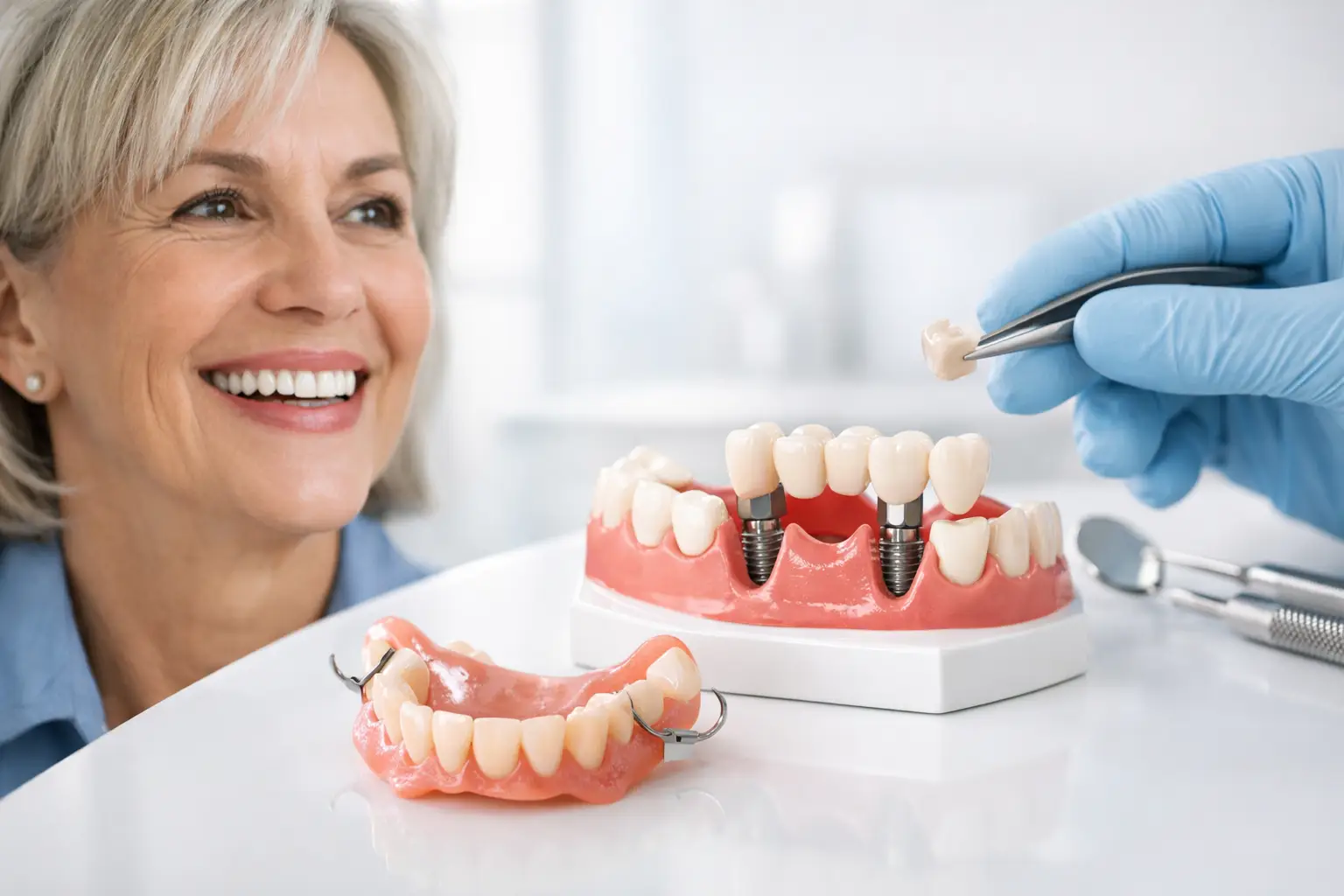
Dental implants replace tooth roots below the gumline. After an implant integrates with the jawbone, it can support a crown, bridge, or other restoration. An implant-supported bridge is often used when several adjacent teeth are missing but enough healthy bone is present to place implants at strategic positions.
Because implants are supported by the jaw rather than neighboring teeth, they can help preserve bone and avoid altering healthy natural teeth. They also feel secure while eating and speaking. Many patients appreciate that an implant-supported bridge is fixed and cared for much like natural teeth, with brushing, flossing methods recommended by the dental team, and regular checkups.
Implant treatment does involve a surgical procedure and a healing period. In some cases, a temporary restoration can be used while the area heals. The timeline varies based on bone quality, gum health, the number of implants needed, and whether preparatory treatment is necessary. A detailed evaluation, including advanced imaging, helps determine what is safe and predictable.
Removable partial dentures
A removable partial denture can replace several teeth while working around healthy teeth that remain. Modern partials can be made with acrylic, metal, or flexible materials, depending on the design and your needs. They are generally more affordable upfront than implant-supported options and can be completed without surgery.
A partial denture must be removed for cleaning and may take time to adapt to. Some people notice movement while eating or speaking, especially if the fit changes over time. As the jawbone and gums change, adjustments or replacement may eventually be needed.
For patients who want a non-surgical solution, need to replace teeth promptly, or are considering a future implant plan, a partial denture can be a practical and attractive option. It should fit comfortably and be monitored regularly, not treated as a permanent appliance to ignore.
Full dentures and implant-retained dentures
When most or all teeth in an upper or lower arch are missing, a full denture may restore the smile and chewing surface. Conventional dentures rest on the gums and can be removed for cleaning. They are often a valuable solution for patients who are not candidates for implant surgery or who want the most economical full-arch option.
However, conventional dentures can shift, particularly on the lower jaw, and may not provide the same chewing confidence as fixed teeth. Implant-retained dentures improve stability by attaching the denture to implants. Depending on the design, the denture may still be removable at home or it may be secured for professional removal during maintenance visits.
The number of implants and the type of attachment system affect the feel, stability, cost, and care routine. This is why an individual consultation matters. The goal is not simply to place implants. It is to create a restoration that fits your lifestyle and supports your long-term oral health.
All-on-4® full-arch treatment
For patients facing the loss of most or all teeth in an arch, All-on-4® treatment can provide a fixed full-arch restoration supported by a carefully planned number of implants. In many cases, the implants are positioned to make the best use of available bone, potentially reducing the need for extensive bone grafting.
A full-arch fixed solution can be life-changing for people who are tired of loose dentures, recurring dental problems, or hiding their teeth. It may allow a temporary fixed smile to be placed on the day of surgery when clinically appropriate, followed later by a final restoration designed for function and appearance.
All-on-4® is not automatically the best choice for every patient. Healthy healing, good home care, and routine professional maintenance are essential. Smoking, uncontrolled medical conditions, active gum disease, clenching, and bone limitations may affect candidacy or require additional planning. A trusted dentist will explain both the benefits and the responsibilities before you decide.
What Happens During a Personalized Consultation
Choosing how to replace multiple missing teeth should start with a complete evaluation, not a quick recommendation. Your dentist will examine your teeth, gums, bite, jawbone, and oral health history. Digital imaging can reveal bone levels, infection, hidden damage, and the safest locations for implants when they are being considered.
You should also have space to discuss what matters most to you. Perhaps you want the most fixed option possible. Perhaps you need an approach that fits a certain budget or timeline. Maybe dental anxiety has kept you from seeking help, and comfort is your first concern. Each of these factors belongs in the treatment conversation.
At Art of Smiles, patients can discuss advanced restorative options in a calm, personalized setting. For those who feel anxious about treatment or need extensive care, sedation options, including IV sedation, can help make the experience more relaxed and manageable. No one should feel embarrassed for needing extra support during dental care.
How to Choose Between Implants, Bridges, and Dentures
There is no single “best” replacement for every person. Dental implants often offer excellent stability and bone-preserving benefits, but they require sufficient bone, surgical planning, healing time, and a higher initial investment. Bridges can be efficient and fixed, but depend on the condition of neighboring teeth. Dentures and partials are versatile and more accessible for many budgets, though they require adjustment and ongoing maintenance.
Think beyond the first appointment. Ask how each option will affect chewing, speech, cleaning, future repairs, and the health of your remaining teeth. Ask what treatment may be needed before restoration, such as addressing gum disease, removing damaged teeth, or rebuilding bone. A clear plan should include the expected sequence of care, not just the final result.
It is also reasonable to ask about comfort at every stage. Local anesthesia, sedation, gentle techniques, and clear communication can make a meaningful difference, especially if past dental experiences have been difficult. Feeling safe is part of receiving excellent care.
Caring for Your New Smile
Replacement teeth need consistent care, whether they are fixed or removable. Brush twice daily, clean around implants and bridge supports as instructed, and keep regular professional visits. Implant restorations cannot develop cavities, but the gums and bone around implants can still become inflamed without proper hygiene.
Avoid using your teeth as tools, and let your dental team know if you notice pressure, looseness, chipping, sore spots, bleeding gums, or a change in your bite. Small concerns are often easier to correct when addressed early.
You do not have to live with missing teeth or settle for a solution that feels uncomfortable. A compassionate consultation can turn a complicated problem into a clear, personal plan – one that helps you eat, speak, smile, and feel like yourself again.
