A missing tooth can change much more than a smile. It can make favorite meals harder to enjoy, make conversations feel self-conscious, and gradually affect the way the remaining teeth fit together. When considering dental implants vs dentures, the right answer is not always the same for every patient. Your oral health, goals, lifestyle, budget, and comfort with treatment all deserve a place in the decision.
At Art of Smiles, we believe choosing tooth replacement should feel informed and reassuring, not rushed. A thoughtful consultation can clarify which solution supports both your health and confidence for the years ahead.
Dental Implants vs Dentures: The Core Difference
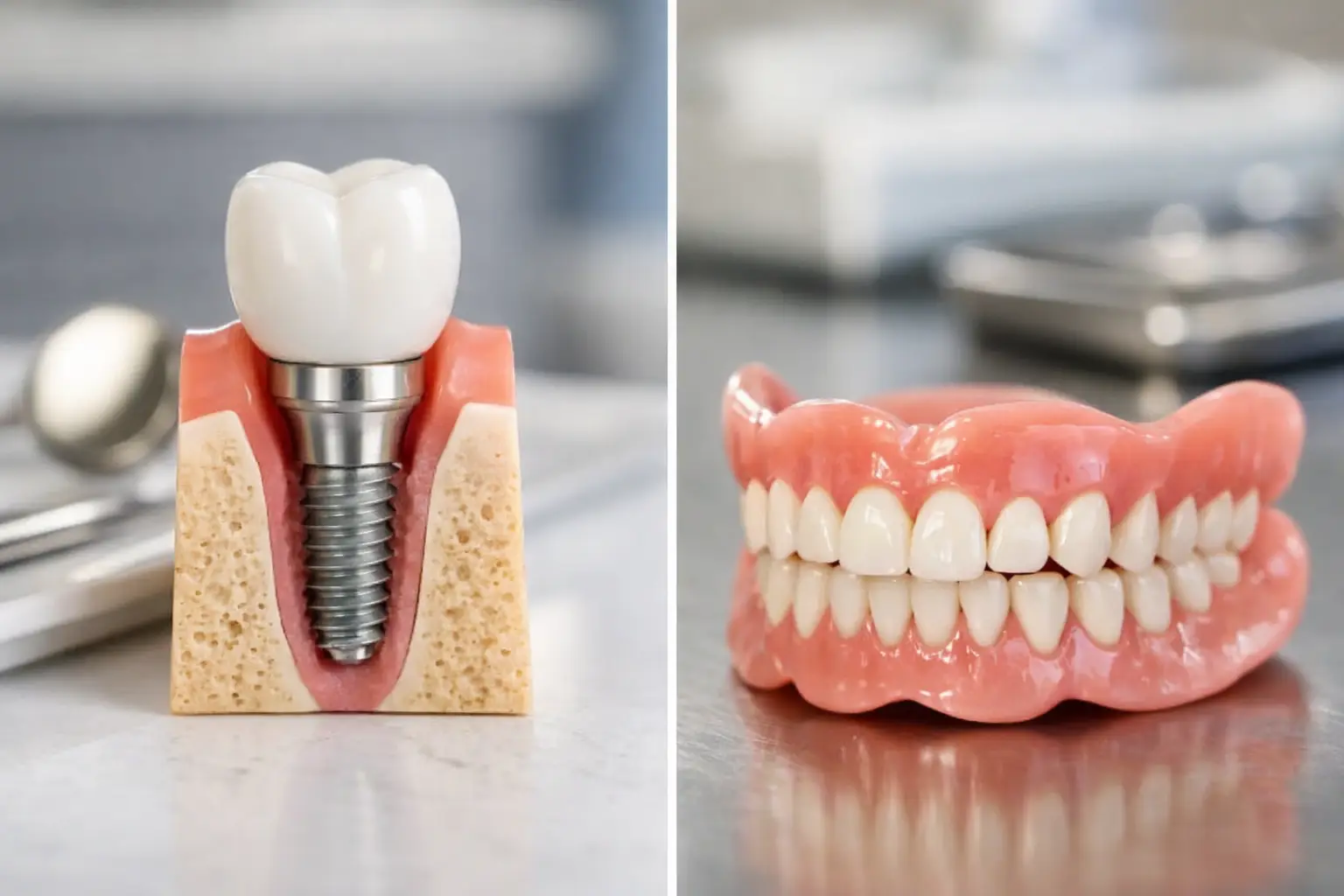
Dentures are removable prosthetic teeth. They can replace one or several missing teeth with a partial denture, or an entire upper or lower arch with a complete denture. Modern dentures can look natural and restore a meaningful amount of chewing ability, especially when they are carefully fitted and adjusted.
Dental implants are small titanium posts placed in the jawbone to serve as replacement tooth roots. After the implant heals and bonds with the bone, it can support a custom crown, bridge, or a full-arch restoration. Because implants are secured in the jaw, they do not come out for cleaning or shift while you speak and eat.
The biggest distinction is support. Traditional dentures rest on the gums, while implants are anchored in the jawbone. That difference affects stability, maintenance, cost, treatment time, and the long-term health of your jaw.
When Dental Implants May Be the Better Choice
For many patients, implants provide the closest experience to having natural teeth again. A single implant topped with a custom crown can replace one missing tooth without requiring the neighboring teeth to be reshaped for a bridge. Multiple implants can also support bridges or full-arch teeth when several teeth are missing.
Stability for Everyday Life
Implant-supported teeth are fixed in place. You can laugh, speak, and enjoy a meal without worrying that a denture will lift, click, or move. This can be especially meaningful for people who have struggled with loose lower dentures, which often have less natural suction than upper dentures.
Implants also tend to offer stronger biting function than traditional removable dentures. While every restoration has limits, many implant patients find it easier to eat a wider range of foods, including crisp vegetables, meat, and other foods that can be challenging with conventional dentures.
Support for the Jawbone
After a tooth is lost, the jawbone in that area no longer receives the stimulation created by chewing. Over time, the bone may shrink. This can alter facial contours and make a denture progressively more difficult to fit securely.
Because an implant functions like a tooth root, it can help preserve bone in the area where it is placed. It does not stop all natural changes associated with aging, but it is the only tooth replacement option that directly stimulates the jawbone. For patients concerned about long-term oral health and facial support, this is a significant advantage.
A Long-Term Investment
Implants generally cost more upfront than dentures, particularly if bone grafting, extractions, or a full-mouth restoration is needed. However, a well-planned and well-maintained implant restoration may last for many years. The crown or bridge attached to an implant can eventually need repair or replacement, but the implant itself is designed for long-term function.
Implants do require healthy gums, sufficient bone, and a commitment to daily brushing, flossing, and regular dental visits. They are not maintenance-free, but their routine care feels familiar to many patients because it is similar to caring for natural teeth.
When Dentures May Be the Better Choice
Dentures remain a valuable, effective option for many people. They are not a lesser choice when they align with a patient’s needs, health circumstances, and preferences.
A traditional denture can often be completed more quickly than implant treatment. It may be a practical choice after multiple extractions, for someone who is not ready for surgery, or for a patient seeking a more accessible initial cost. Partial dentures can also fill gaps when the remaining teeth are healthy enough to support the appliance.
Dentures are removable, so they are taken out at night and cleaned separately from the mouth. Some patients appreciate this simplicity. Others find the daily routine, use of denture adhesive, or occasional adjustments less convenient. The experience is personal, and a good fit can make a substantial difference in comfort.
It is also worth recognizing that dentures can be part of an implant plan rather than an alternative to one. Implant-supported dentures use several strategically placed implants to hold a removable denture more securely. They can reduce shifting while still allowing the appliance to be removed for cleaning. For many full-arch patients, this offers a helpful middle ground between conventional dentures and a fixed full-arch solution.
Comparing Comfort, Treatment Time, and Cost
Comfort is about more than whether a procedure is physically easy. It also includes how confident you feel throughout the process. Implant placement is a surgical treatment, and some patients feel nervous about the idea of dental surgery. With modern planning, gentle techniques, and appropriate sedation options, treatment can be far more comfortable than patients expect. For those with significant dental anxiety, IV sedation may allow care to feel calm and manageable.
Dentures usually involve less invasive treatment at the start, although extractions may still be necessary. The gums and bone change as they heal, so immediate dentures often require adjustments and may later need to be relined or replaced. A new denture can also take time to adapt to. Speaking and eating may feel unfamiliar in the beginning, but most patients improve with practice and professional adjustments.
Cost matters, and it should be discussed openly. Dentures commonly have a lower initial fee, while implants involve a greater upfront investment because they include surgical placement, restorative components, and detailed treatment planning. Yet the most affordable option today is not always the least expensive over time. Dentures may require relines, repairs, adhesives, and periodic replacement as the mouth changes. A personalized treatment plan can make the full financial picture clearer.
Who Is a Good Candidate for Each Option?
The best way to determine candidacy is through a comprehensive dental examination, digital imaging, and a conversation about your health history and goals. Implant candidates need adequate bone or the ability to build it through grafting, healthy gum tissue, and medical conditions that are well managed. Smoking and uncontrolled diabetes can affect healing, but they do not automatically rule out treatment. They simply call for careful planning.
Dentures can work for a broad range of patients, including those who have experienced substantial bone loss or who prefer to avoid implant surgery. However, bone loss does not automatically mean implants are out of reach. Bone grafting, angled implants, or full-arch options such as All-on-4 may be considered in appropriate cases.
The condition of your remaining teeth is also important. If you are missing one tooth and surrounding teeth are healthy, a single implant may protect those neighboring teeth better than a bridge or partial denture. If multiple teeth are failing, a full-arch implant solution may offer a more predictable fresh start than trying to restore teeth with a poor long-term outlook.
Questions Worth Asking at Your Consultation
A meaningful consultation should go beyond, “Which option costs less?” Ask how each choice will affect your ability to eat, speak, clean your mouth, and maintain your result over time. Ask whether you are likely to need bone grafting, how long healing may take, and what type of follow-up care is expected.
You may also want to ask what happens if a denture becomes loose, an implant restoration needs repair, or your oral health changes in the future. Clear answers help you choose with confidence instead of relying on assumptions or a one-size-fits-all recommendation.
The right replacement is the one that helps you feel comfortable, healthy, and confident enough to use your smile without holding back. A compassionate, detailed conversation with an experienced dentist can turn a difficult decision into a clear next step.
