A tooth that hurts when you chew, shifts in place, or no longer feels secure can make every meal and conversation feel uncertain. This guide to replacing failing teeth is designed to help you understand your options without pressure, so you can make a confident decision about your health, comfort, and smile.
Failing teeth do not always require the same solution. In some cases, a tooth can be treated and preserved. In others, removing a damaged tooth and replacing it may offer a healthier, more predictable outcome. The right plan depends on your oral health, the condition of your bone and gums, your goals, and how comfortable you feel during treatment.
When Is a Tooth Considered Failing?
A tooth may be considered failing when it can no longer reliably support normal chewing or when keeping it could threaten the health of nearby teeth, gums, or bone. Severe decay, deep cracks, advanced gum disease, repeated infection, and a failed root canal can all lead to this point.
Warning signs can include ongoing pain, swelling, a loose tooth, recurring abscesses, sensitivity that lingers after hot or cold foods, or difficulty chewing on one side. Some failing teeth are surprisingly quiet, especially when gum disease is involved. That is why regular examinations and digital imaging matter. They help reveal problems below the gumline before discomfort becomes an emergency.
Saving a natural tooth is often the preferred option when it is healthy enough to restore. A filling, crown, root canal, or periodontal treatment may be appropriate. But when a tooth has a poor long-term prognosis, repeatedly treating it can become more costly, uncomfortable, and frustrating than choosing a thoughtful replacement.
A Guide to Replacing Failing Teeth: Your Main Options
Modern dentistry offers several ways to replace one tooth, several teeth, or an entire arch. Each has benefits, limitations, and different care requirements.
Dental implants
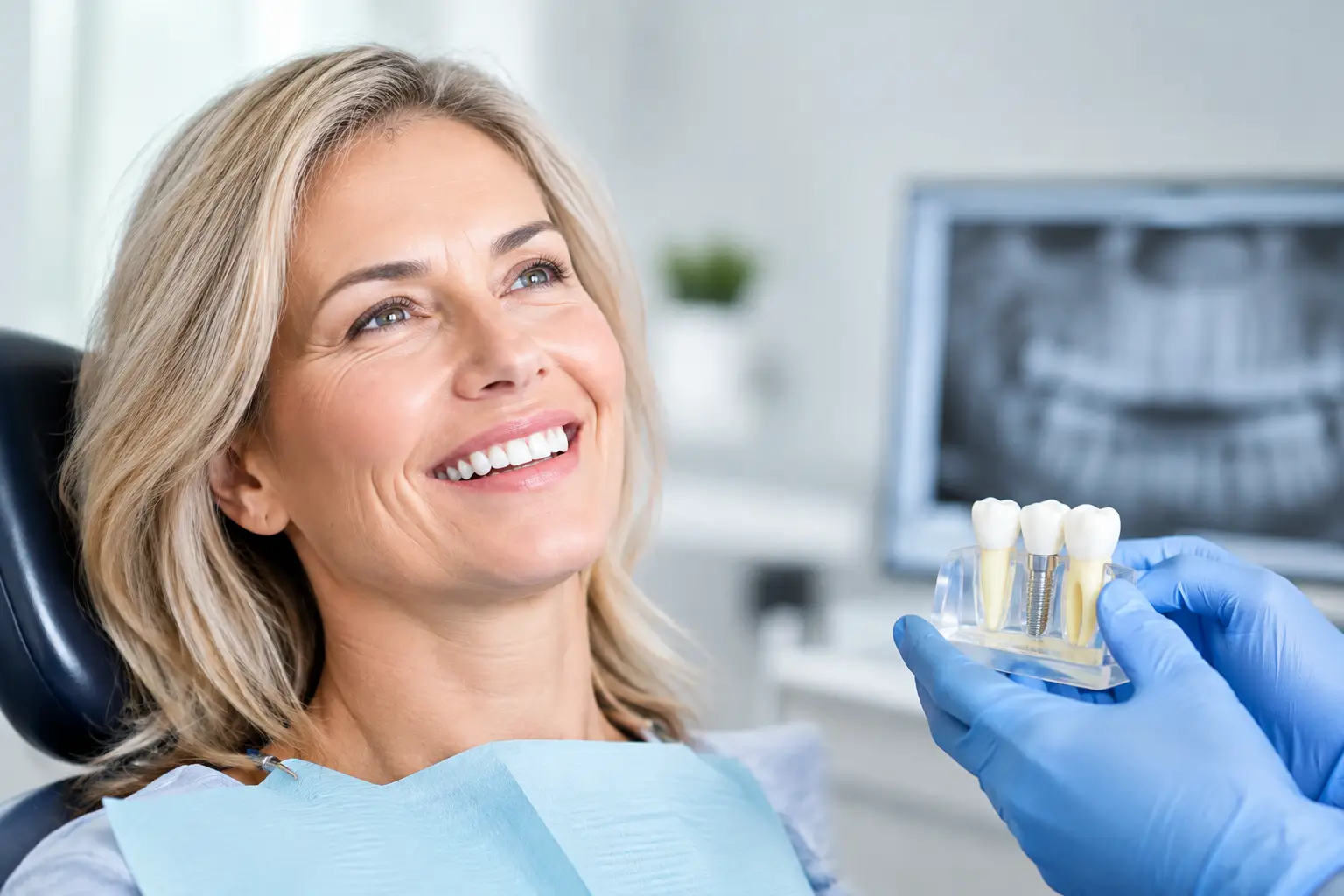
A dental implant replaces the root of a missing tooth with a small biocompatible post placed in the jawbone. Once it has healed, it can support a custom crown, bridge, or full-arch restoration. Because implants are anchored in bone, they feel stable and help preserve the jawbone that can gradually shrink after tooth loss.
For a single missing tooth, an implant with a crown can often look and function much like a natural tooth without requiring adjacent healthy teeth to be altered. Implants are also useful for securing multiple teeth or a full denture.
However, implant treatment is not one-size-fits-all. Adequate bone, healthy gums, and good overall health support the best outcome. Some patients need bone grafting or gum treatment before implant placement. Healing also takes time, although temporary teeth may be available during the process.
Implant-supported bridges and full-arch treatment
When several neighboring teeth are failing or missing, an implant-supported bridge may replace them without placing one implant for every tooth. This can be a strong, efficient option for patients who want a fixed restoration but have multiple gaps.
For people facing the loss of most or all teeth in an upper or lower arch, full-arch implant treatment, including All-on-4® solutions, may provide a more secure alternative to traditional dentures. A carefully planned number of implants supports a full set of replacement teeth. For the right candidate, this approach can restore the ability to chew more comfortably, speak with greater confidence, and smile without worrying about a removable appliance shifting.
Full-arch care is a significant investment in health and function. It requires detailed planning, a commitment to home care and follow-up visits, and an honest discussion of what is realistic for your bone, bite, and medical history.
Fixed dental bridges
A traditional bridge fills a gap by connecting a replacement tooth to crowns placed on the teeth beside it. Bridges can be completed more quickly than implants in many situations and may be appropriate when adjacent teeth already need crowns.
The trade-off is that the supporting teeth must be reshaped for crowns. A bridge also does not stimulate the bone beneath the missing tooth, so bone changes can still occur over time. With good hygiene and regular professional care, a bridge can be a practical and attractive solution.
Partial and complete dentures
Removable partial dentures replace several missing teeth, while complete dentures replace an entire upper or lower arch. They are often more affordable upfront and can restore appearance and basic function relatively quickly.
Today’s dentures can look natural, but fit and stability vary from person to person. Over time, changes in the jawbone may require adjustments, relines, or replacement. Implant-supported dentures can improve retention for patients who want a removable option with less movement while eating and speaking.
Choosing the Best Path for Your Smile
The best replacement is not automatically the most expensive one, nor is it always the fastest. A personalized examination should consider the health of the remaining teeth, gum condition, bone levels, bite forces, medical history, timeline, budget, and personal priorities.
For example, an implant may be ideal for one healthy patient with a single missing tooth, while a bridge may make more sense when nearby teeth already require crowns. A patient with advanced periodontal disease may need gum treatment and extractions before discussing implants. Someone who has avoided dental care because of fear may benefit from a treatment plan that prioritizes calm, comfort, and a manageable pace.
Ask your dentist to explain the expected lifespan, maintenance needs, healing timeline, and total treatment sequence for each option. A clear plan should address not only the tooth being replaced, but also why it failed and how to protect the rest of your mouth.
Comfort Matters During Complex Dental Care
Fear of pain, a strong gag reflex, or a difficult past dental experience should never prevent you from seeking care. Replacing failing teeth can involve several appointments, and comfort should be part of the conversation from the beginning.
Depending on your needs, comfort measures may include local anesthetic, oral sedation, nitrous oxide, or IV sedation. IV sedation can be especially helpful for patients with significant anxiety or those completing more extensive treatment. You remain carefully monitored while feeling deeply relaxed, and many patients remember little of the procedure afterward.
At Art of Smiles, treatment planning is built around compassionate communication as well as advanced care. As the area’s only IV sedation dental office, the practice can help eligible patients receive complex treatment in a setting designed to feel calmer and more reassuring.
Protecting Your New Teeth for the Long Term
Replacement teeth need ongoing care, even though they cannot decay in the same way natural enamel does. Gum inflammation, plaque buildup, bite changes, and grinding can still damage restorations or compromise implants.
Daily brushing, cleaning between teeth or around implants, professional cleanings, and routine examinations are essential. If you clench or grind your teeth, a custom nightguard may help protect crowns, bridges, and implant restorations from excess force. Tobacco use and untreated gum disease can also increase the risk of complications, so addressing both supports a healthier result.
If you have a painful, loose, cracked, or infected tooth, waiting rarely makes the choice easier. A compassionate dental evaluation can clarify whether the tooth can be saved or whether replacement offers the better future. The next step is simply a conversation – one focused on helping you eat, speak, and smile with comfort again.
